Norse Mythology Gods: A Worldbuilder's Field Guide
Summary
Norse mythology gods split into the Aesir (Odin, Thor, Tyr, Baldr) and the Vanir (Freyr, Freyja, Njord), with Loki as the outsider who moves the plot. Their value to a worldbuilder is not the names but the pressure: a war that ended in a hostage swap, gods who pay for power with their bodies, and Ragnarok as a fixed ending. Pick a fault line, give each god a price, and you have a playable world.
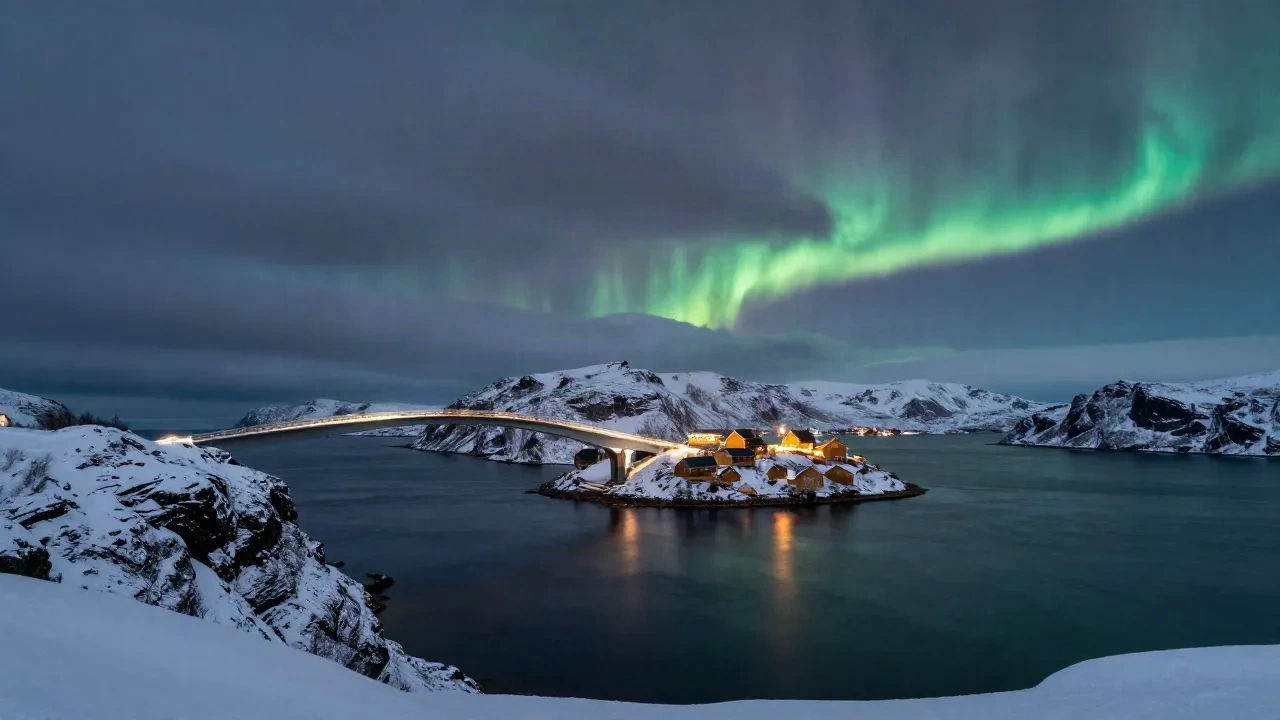
Norse mythology gods fall into two families, the Aesir and the Vanir, plus a handful of outsiders like Loki who belong to neither. Odin, Thor, Tyr and Baldr are Aesir. Freyr, Freyja and Njord are Vanir. The Aesir hold war, law and wisdom. The Vanir hold harvest, sea and seidr magic. Treat that split as a faction system and you have the skeleton of a playable world.
The first Norse pantheon most of us build is a flat list. Odin: wisdom. Thor: thunder. Freyja: love. It read like a trading-card set, and it played like one. Nothing pushed against anything else. The sources do not give you a list. They give you a feud, a hostage swap and a countdown to the end.
Who are the Norse gods, really?
Most of what we know comes from two medieval Icelandic sources: the Poetic Edda, a set of anonymous poems, and the Prose Edda, written down by Snorri Sturluson in the 13th century. Both were set down by Christians looking back at an older oral tradition, so every "fact" about a god comes with a mild asterisk. That is good news for you. Sources that disagree leave room for your version.
The cast is bigger than the movies suggest. Snorri lists a dozen or so Aesir gods and a similar number of goddesses, but only a handful drive stories. Learn those first:
Odin: chief of the Aesir. God of poetry, war, death and runes. Traded an eye at Mimir's well for wisdom, hung nine nights on the world tree for the runes.
Thor: thunder, the hammer Mjolnir, and the protection of Midgard, the human world. The only god who regularly solves problems by hitting them.
Tyr: law and oaths. Put his hand in the wolf Fenrir's mouth as a pledge, and lost it when the pledge was a lie.
Baldr: the beloved one. His death is the hinge of the whole mythology.
Frigg: Odin's wife, who knows fates and keeps them quiet.
Heimdallr: the watchman at the rainbow bridge, with a horn that will announce the end.
Freyr, Freyja, Njord: the Vanir trio. Fertility, sea, wealth, and a strain of magic the Aesir had to learn from them.
Loki: shapeshifter, blood-brother to Odin, mother of the horse Sleipnir and father of Fenrir, the world serpent and Hel.
If you came for baby names or character name lists, our guide to Norse mythology names covers that. This piece is about what the gods do to each other, because that is what a game or a story can use.
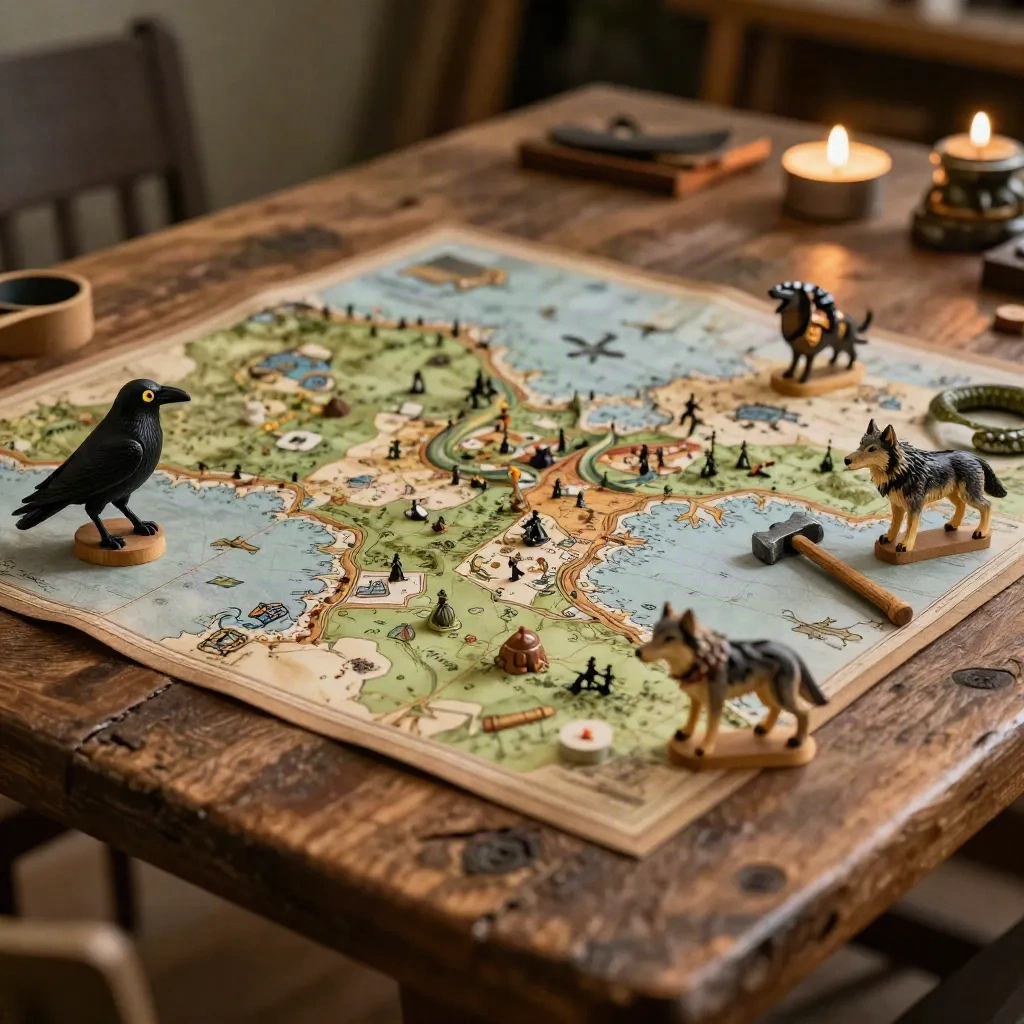
Why do the Aesir and Vanir matter for a world?
Because they fought a war and then merged. That is a faction system handed to you for free.
In the story, the two families battled to a stalemate and swapped hostages to seal peace. Njord and his children Freyr and Freyja went to Asgard. The Aesir sent Hoenir and Mimir to the Vanir. Mimir lost his head in the exchange, which is the kind of detail a designer remembers.
Read that as game design. You have two cultures with different economies, different magic, and a history of distrust. The Aesir trade in force and law. The Vanir trade in growth and foresight. When they sit at the same table, every alliance has a cost.
Skip the version where all the gods are one happy family. A pantheon with no old grudges has no plot to hand out.
Here is a prompt format that works when you want to sketch this in a world generator. Keep it concrete and ask for the tension, not the lore:
a hall of two peoples sharing one table after a long war, one side wears iron and oath-rings, the other wears antlers and seed-bundles, both sides watch each other's handsWhat does each god actually do in a story?
Gods in the sources are not abstractions. They are characters with jobs and flaws, and the jobs create the plot.
Odin collects. He gathers knowledge, warriors and omens, and he pays for them with his own body. He is a poor guide for mortals because he is always working toward Ragnarok. In a game, make him the quest-giver whose advice you should never take at face value.
Thor protects. He is direct, loud, and often fooled by smaller tricksters. His stories are road trips where something goes wrong in the middle of a giant's hall. He is your cheerful fixer.
Tyr swears. He represents the idea that law costs something. An oath-keeping mechanic fits here: break your word and lose a stat permanently, the way he lost his hand.
Freyja chooses. She receives half of the battle dead in her hall Folkvangr, while Odin takes the other half to Valhalla. That is a split afterlife, which is a gift to anyone designing death systems.
Loki changes. He is the engine. He cuts Sif's hair, builds the bargain that brings Sleipnir into the world, and engineers Baldr's death. He also pulls the gods out of trouble more than once, usually the trouble he started.
Some of the choices you make as a designer follow from there. If you want a pantheon that feels alive, give each god a verb, a cost and a person they cannot stand.
How do you turn a pantheon into a playable world?
Start from pressure, not from names. Five moves get you from a reading list to a world someone can step inside.
Pick the fault line. Aesir versus Vanir is the obvious one. Gods versus giants is another. Pick one and make it the central tension.
Give every god a price. Odin pays in sight, Tyr in his hand, Freyja in her necklace. Costs make gods feel real.
Keep the trickster off the leash. Loki should be the one you cannot script.
Place the world tree. Yggdrasil connects nine realms. Do not try to build all nine. Build two and a road between them.
Decide when Ragnarok starts. The myth ends in a countdown. A world that knows it is dying plays differently from one that is simply large.
If you want to test these ideas as scenes before committing to maps, text engines are cheap and fast. AI Dungeon is good for running a god's temperament as a conversation, and you learn fast whether Tyr's oath mechanic holds up in play.
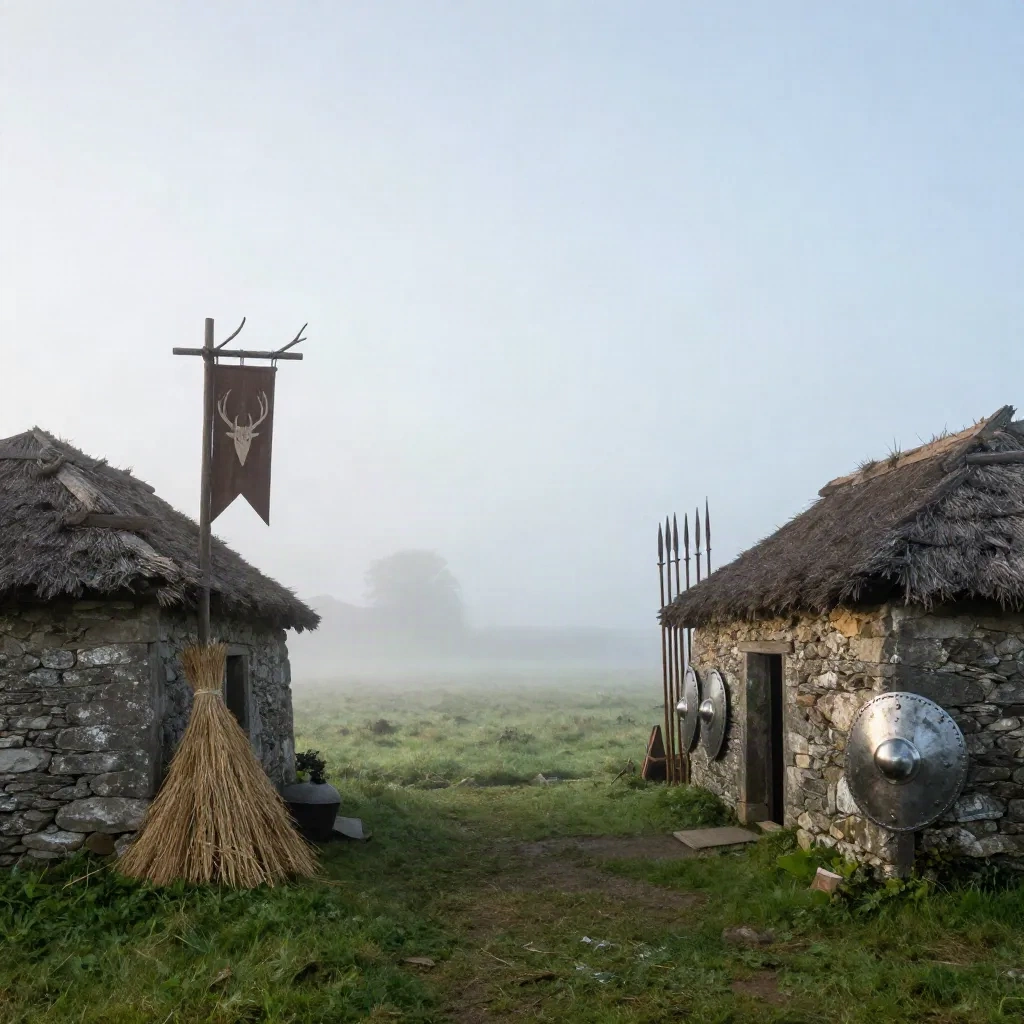
Which realms should a game actually use?
Nine realms is a trap. The myths name Asgard, Vanaheim, Alfheim, Midgard, Jotunheim, Svartalfheim, Nidavellir, Niflheim and Muspelheim, and the sources are vague about how they connect. That vagueness is useful. It means you can fill in the roads yourself.
Pick a pair with contrast. Midgard against Jotunheim gives you a human settlement against a giant frontier. Asgard against Niflheim gives you a bright citadel above a cold dead land. Muspelheim and Niflheim, fire and ice, are the first two realms in the creation story, so they make a compelling opening scene.
Do not mistake the realms for levels. Think of them as moods. A traveller should know where they are from the light and the weather before any text tells them.
Worth it if you build one realm deeply instead of nine thinly. A single realm with weather, politics and a grudge will outlast a map with nine empty labels.
Where do writers get stuck with Norse gods?
Three traps appear again and again.
Marvel-flattening. Thor and Loki as brothers is a modern invention. In the sources Loki is Odin's blood-brother, and Thor's mother is a giantess, Jord. Use the comic version if you like, but know you are choosing it.
The good-and-evil split. The gods are not righteous and the giants are not villains. Gods marry giantesses. Giants hold wisdom the gods need. Every conflict is a negotiation that went wrong.
Treating Ragnarok as a boss fight. The myth is not about winning. The gods know they will lose, and they fight anyway. That is the emotional core, and it is a stronger design principle than any damage table.
For narrative scaffolding, a drafting tool can keep your pantheon notes consistent across chapters. Sudowrite and NovelAI both hold long lore sheets in context, and both will happily invent a god you did not ask for, so check every new name against your sources.
What does the end of the world do to design?
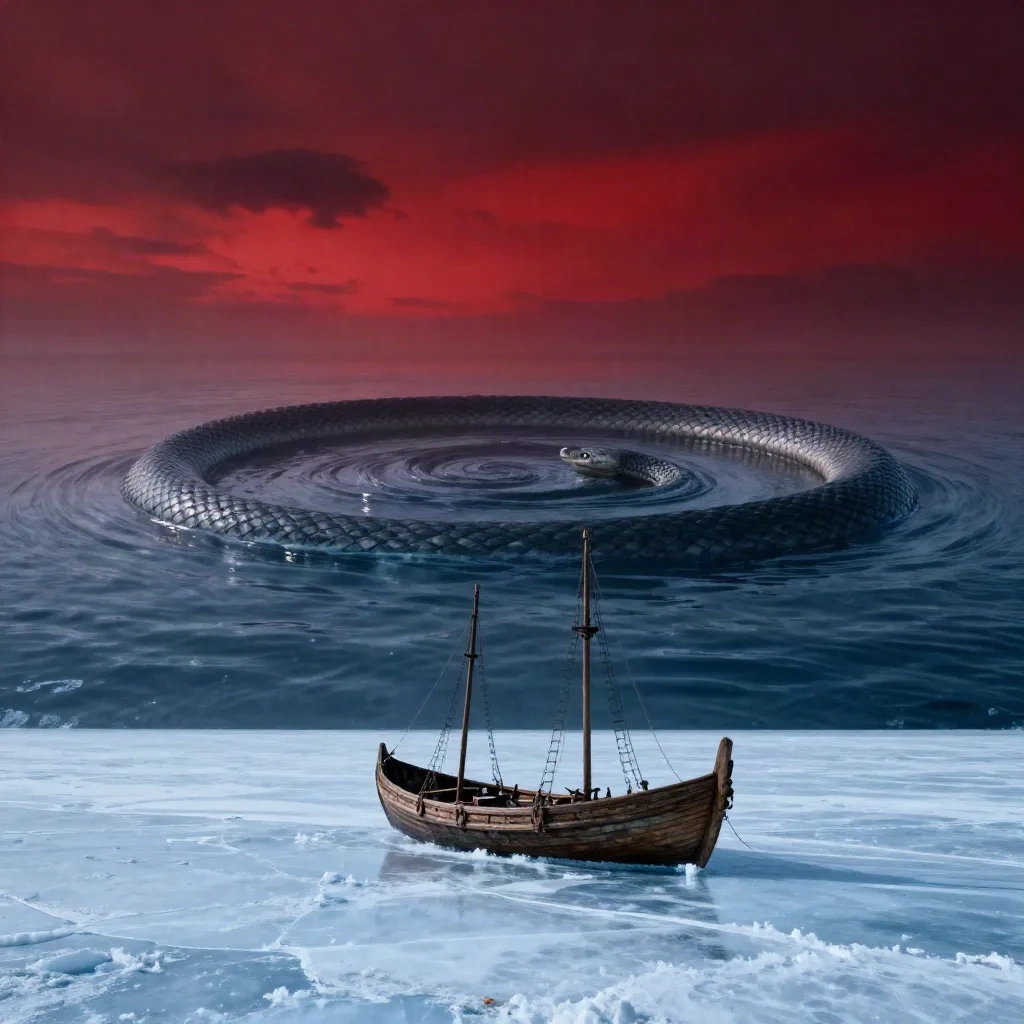
Ragnarok is the most generous gift in Norse mythology. It gives you a clock, a final act and a reason for every small decision. The wolf Fenrir breaks free. The world serpent rises. Heimdallr blows the horn. Odin falls to the wolf, Thor kills the serpent and dies of its poison. A new world rises from the sea afterwards, with a few survivors and Baldr returned.
The lesson for a creator is to decide your ending first. If you know the world ends in a flood of fire, every faction, oath and alliance can point at that date. Players read dread in the details before you say a word about it.
So how should you start tonight?
Do this in one sitting. Pick three gods who dislike each other. Write one sentence per god: a verb, a price, a grudge. Then write the prompt for the room where all three are forced to sit down.
a long hall at the edge of a frozen sea, a one-eyed host pouring drink for a hammer-carrying guest and a quiet man with a missing hand, a third stranger by the fire changing shape when no one looksFork it. Change one thing. See what happens. If the room feels tense, you have a world. If it feels like a list, add a grudge.