Norse Mythology Names: 100+ for Gods, Warriors, and Worlds
Summary
This guide covers 100+ Norse mythology names drawn from the Eddas and Viking Age sources, organized by role: gods of the Aesir and Vanir clans, Valkyries, giants, dwarves, and mortal heroes. It also explains the Old Norse naming logic so worldbuilders and game designers can generate names that fit their own pantheons.
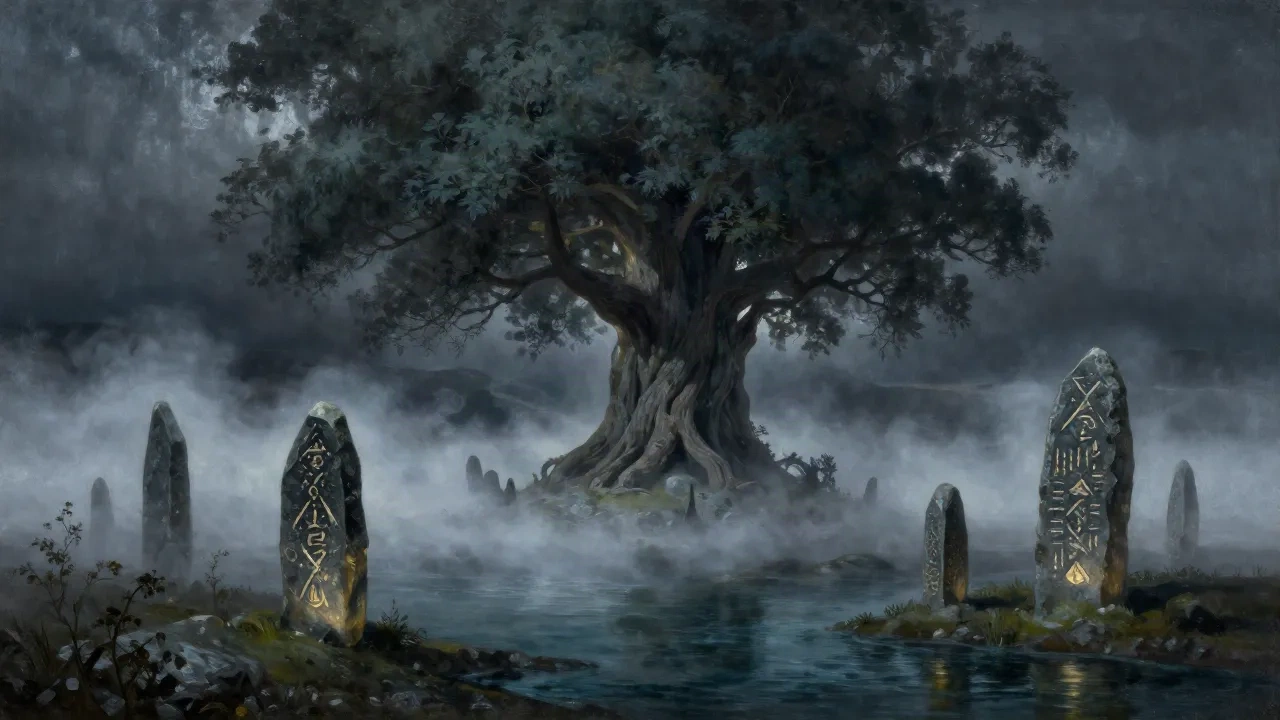
The first world I dropped a Norse-named character into was a small tabletop campaign. The GM named one NPC Halfdan and another Sigrun. Within two sessions, the table treated them differently from every character named Jake or Elena. Something in those syllables signaled age, weight, belonging.
That's what norse mythology names do. They carry compressed information: clan, function, cosmological role, without a word of exposition. If you're building a world tonight, that compression is worth understanding.
The gods who hold the roof up
The Aesir are the primary Norse pantheon. Their names tend toward short, elemental constructions. Odin comes from odr, meaning inspired fury or frenzy. Thor is simply thunder. Tyr derives from a Proto-Germanic root for sky or god.
Here are the core Aesir names, with their meanings:
Odin: inspired fury; chief of gods, god of wisdom and war
Thor: thunder; protector of humans and slayer of giants
Tyr: sky god; associated with law, justice, and sacrifice
Baldur: courage or brightness; the beloved god slain by mistletoe
Heimdall: one who illuminates the world; guardian of Bifrost
Loki: uncertain origin; trickster, shapeshifter, catalyst of Ragnarok
Bragi: poetry; god of skalds and storytellers
Vidar: wide warrior; silent son of Odin destined to survive Ragnarok
Hodr: battle; the blind god who accidentally kills Baldur
Forseti: one who presides; god of justice and reconciliation
Ullr: glory or brilliance; god of archery and skiing
Vali: unknown root; born specifically to avenge Baldur's death
The Vanir are the second Norse clan, older and associated with fertility, sea, and magic:
Freyr: lord; god of sunshine, rain, and harvest
Freyja: lady; goddess of love, war, and seidr magic
Njord: related to the Proto-Germanic nerthuz (earth or strength); god of sea and wind
Notice the pattern. Most Aesir names resolve to either a natural force (thunder, sea) or an abstract quality (fury, brilliance, prestige). That's not coincidence. The Norse worldview treated nature and human virtue as the same category of thing.
Goddesses of the Aesir
The goddesses, called Asynjur, are frequently underrepresented in pop culture relative to their actual prominence in the Eddas.
Frigg: beloved; Odin's wife, goddess of marriage and foresight
Skadi: damage or shadow; giantess who became a goddess, associated with winter and hunting
Sif: bride or kinswoman; golden-haired goddess, wife of Thor, associated with earth
Idunn: ever young; keeper of the golden apples of immortality
Sigyn: victorious girlfriend; Loki's loyal wife who catches venom to spare him pain
Hlin: protector; one of Frigg's attendants, possibly an aspect of Frigg herself
Vor: aware or careful; goddess who knows everything
Syn: denial; guardian of doors and threshold spaces
Var: pledge; goddess who punishes oath-breakers
Eir: mercy or help; goddess of healing
Gefjon: giver; goddess associated with ploughing and unmarried women
A worldbuilder's note: Syn and Var are unusually usable. A guardian of thresholds and a punisher of oath-breakers both generate immediate dramatic function. Drop either name on a faction, a location, or an NPC and the story pressure follows.
Valkyries: the names that choose the slain
The Valkyries are where Norse naming gets most operationally precise. Each name is almost literally a job description.
Brynhildr: battle armor; the most famous Valkyrie, hero of the Volsunga saga
Gondul: wand-wielder or magic staff
Hildr: battle; one of the oldest Valkyrie names
Sigrun: victory rune; Valkyrie who loves the hero Helgi
Skuld: debt or future; one of the three Norns and also a Valkyrie
Geirskogul: spear-shaker
Randgridr: shield destroyer
Herfjotyr: army-fetter; she who binds warriors in place
Svava: she who wraps or envelops
Hlokk: noise or battle
Goll: tumult or noise of battle
Rota: she who causes turmoil
Mist: cloud or mist
Skogul: shaker or high-towering
The construction is almost always compound: element plus element. Brynhildr is brynja (armor) plus hildr (battle). Sigrun is sigr (victory) plus run (rune or secret). Understanding the components lets you build new names that feel authentic without being directly borrowed.
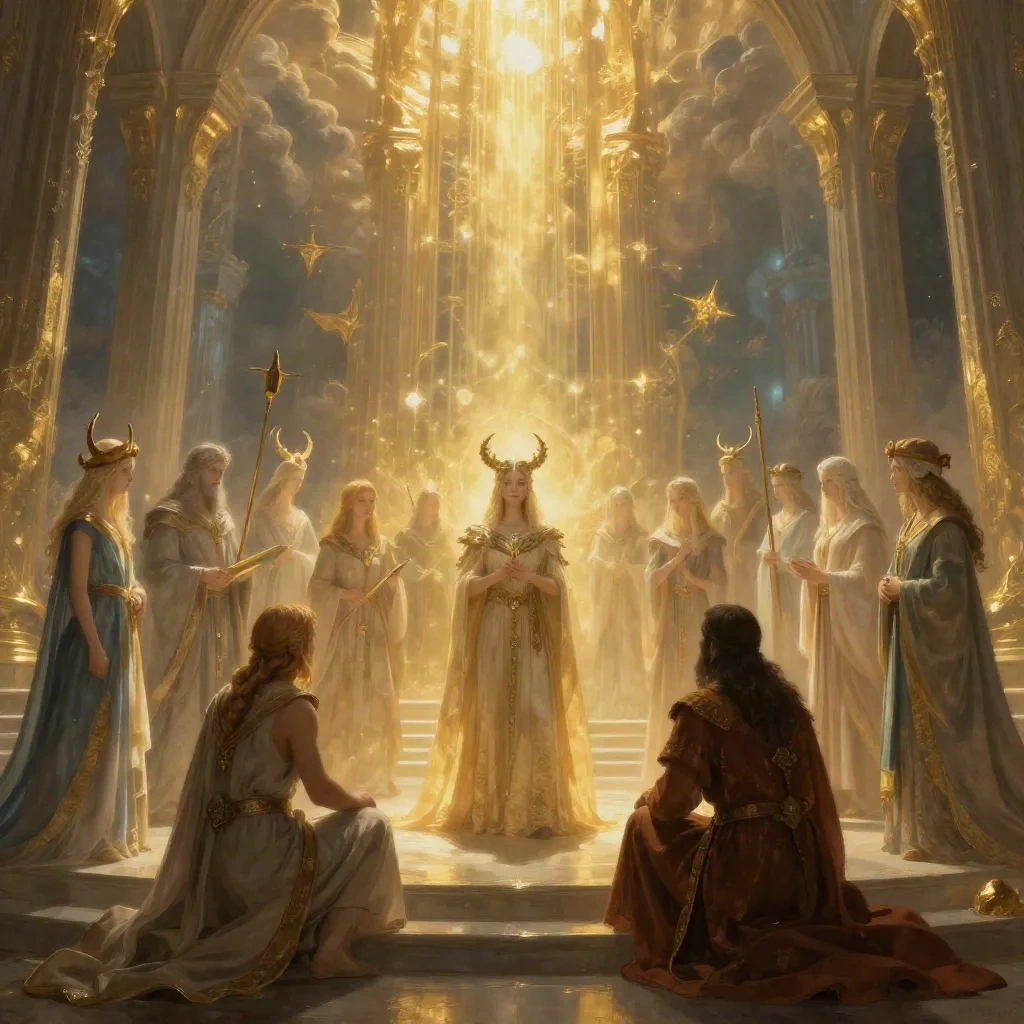
Giants, monsters, and the antagonist tier
In Norse cosmology, the Jotnar, the giants, are not straightforwardly evil. They're older than the gods. Many gods have giantess mothers. But their names tend toward larger, heavier phonemes and often signal primordial forces.
Key Jotnar and monsters:
Ymir: uncertain; the primordial giant whose body becomes the world
Surtr: black or swarthy; fire giant who destroys the world at Ragnarok
Thrym: din or thunder; frost giant king who steals Thor's hammer
Aegir: sea or ocean; giant of the deep who hosts feasts for the gods
Ran: robbery or thief; Aegir's wife, collects drowned sailors in her net
Jormungandr: great beast or immense monster; the World Serpent
Fenrir: fen-dweller; the great wolf bound by the gods until Ragnarok
Hati: he who hates; wolf who chases the moon
Skoll: treachery; wolf who chases the sun
Nidhogg: he who gnaws from below; dragon at the root of Yggdrasil
Garm: unknown; hound who guards the entrance to Hel
Angrboda: she who brings grief; giantess, mother of Fenrir, Jormungandr, and Hel
Hel: concealed or covered; ruler of the realm of the dead, daughter of Loki
For game designers: the Jotnar naming logic rewards antagonists who are forces rather than personalities. Surtr doesn't have motives you negotiate. He ends the world. The name signals that. Your world's antagonist tier can borrow the same compression.
Heroes and mortals: the human register
Norse sagas spend as much time on mortal heroes as on gods. Their names follow similar compound logic but feel grounded: less cosmic, more tribal.
Sigurd: victory guardian; slayer of the dragon Fafnir
Gunnar: battle warrior
Ragnar: warrior of judgment (popularized by Ragnar Lodbrok)
Bjorn: bear
Leif: heir or descendant
Erik: ever-ruler or eternal ruler
Harald: army ruler
Ivar: bow warrior
Ingvar: warrior of Ing (the god Freyr)
Halfdan: half-Dane
Gudrun: divine rune or god's secret
Astrid: divinely beautiful
Ragnhild: army battle
Ingrid: Ing's beauty (Ing being an aspect of Freyr)
Thora: Thor's warrior; female form of Thor
Sigrid: victory ride or beautiful victory
Helga: holy or blessed
Hervor: army guard; shield-maiden hero of the Hervarar saga
The mortal names usually carry one divine component (a god's name, a concept like victory or army) combined with a human descriptor. Sigurd is victory-guard. Gudrun is divine-rune. The mortal always knows which larger force they belong to.
If you want to run a Norse-flavored text adventure with these names powering your NPCs, AI Dungeon lets you drop into any world you describe and test how the characters land in actual play.
Dwarves and the craftsmen tier
Norse dwarves are among the best-named characters in any mythology. They built Mjolnir, forged the ribbon that bound Fenrir, and made Odin's spear Gungnir. Their names tend toward short, hard-sounding constructions.
Brokkr: the one who works with metal fragments
Sindri: spark; Brokkr's brother, together they forge Mjolnir
Eitri: poison or venom
Durin: sleeping one; king of dwarves in some sources
Dvalin: sleeping or unconscious
Nori: narrow
Dori: one who drills or bores
Andvari: watchful spirit; the dwarf whose cursed gold drives the Volsunga saga
Alviss: all-wise; dwarf who attempts to marry Thor's daughter
Regin: mighty; dwarf or skilled smith who raises Sigurd
Fafnir: embracer; dwarf-turned-dragon, killed by Sigurd
Tolkien borrowed heavily from this list. Gandalf is here. So are Thorin, Fili, and Kili. He found the list in the Poetic Edda and kept the names almost verbatim. That's how good the source material is.
NovelAI has a storytelling mode purpose-built for exactly this kind of world: drop in your pantheon, your faction names, your dwarf forge, and let it generate what happens between your named characters.
The naming logic: how to build your own
Old Norse naming follows recoverable rules. Understanding them lets you generate original names that feel authentic.
Element-words that repeat across the pantheon:
sigr: victory (Sigurd, Sigrun, Sigrid)
hildr: battle (Brynhildr, Hildr, Herfjotyr)
gunnr: war, battle (Gunnar, Gondul)
ulfr: wolf (Ulfhedinn, Fenrir's indirect family)
vin: friend or winner (Eivindr, Asvinr)
rikr: ruler or powerful (Erik, Freyr)
bjorn: bear (Bjorn, Berserker literally means bear-shirt)
run: rune or secret (Sigrun, Gudrun, Ragnhild)
Suffix patterns that signal role:
-hildr or -hild: marks female warriors (Brynhildr, Ragnhild)
-ulfr: marks wolf-aspect characters
-gunnar: marks battlefield commanders
-vikr or -vik: marks sea or coast origins
If your world has a faction dedicated to ice, you combine the Old Norse word for ice (is) with a role-suffix. A scout becomes Isulfr. A ruler becomes Isrikr. The name now carries faction membership, function, and phonemic texture in two syllables.
For writers building full Norse-inspired worlds, Sudowrite is the fiction AI that understands scene-building and character voice at that level of craft.
The three Norns and the names you give fate
The Norns are the closest thing Norse mythology has to destiny itself. They weave the fate of gods and humans at the base of Yggdrasil.
Urd: that which has become; past
Verdandi: that which is becoming; present
Skuld: that which shall be; future (also listed as a Valkyrie)
These three names together are one of the most elegant naming systems in any mythology. Past, present, and future encoded into character identity. If you're building a faction that controls time, a bureaucracy of fate, or a trio of NPCs whose function is to tell players what they cannot change: these are your names.
The world you're building has structures underneath it. The names you choose signal what those structures are. Urd knows what happened. Verdandi is watching right now. Skuld will collect what you owe.
Type that into your world's lore doc. See what happens next.