Procedural Generation in Games: What It Really Does
Summary
Procedural generation creates game content via deterministic algorithms using a numeric seed. Six core techniques power most implementations: Perlin noise, Wave Function Collapse, cellular automata, BSP, L-systems, and Markov chains. AI has transformed the curation layer, making contextually coherent output accessible to solo developers without extensive rule-writing. The fork is the creative workflow: change one seed variable, ship a different world.
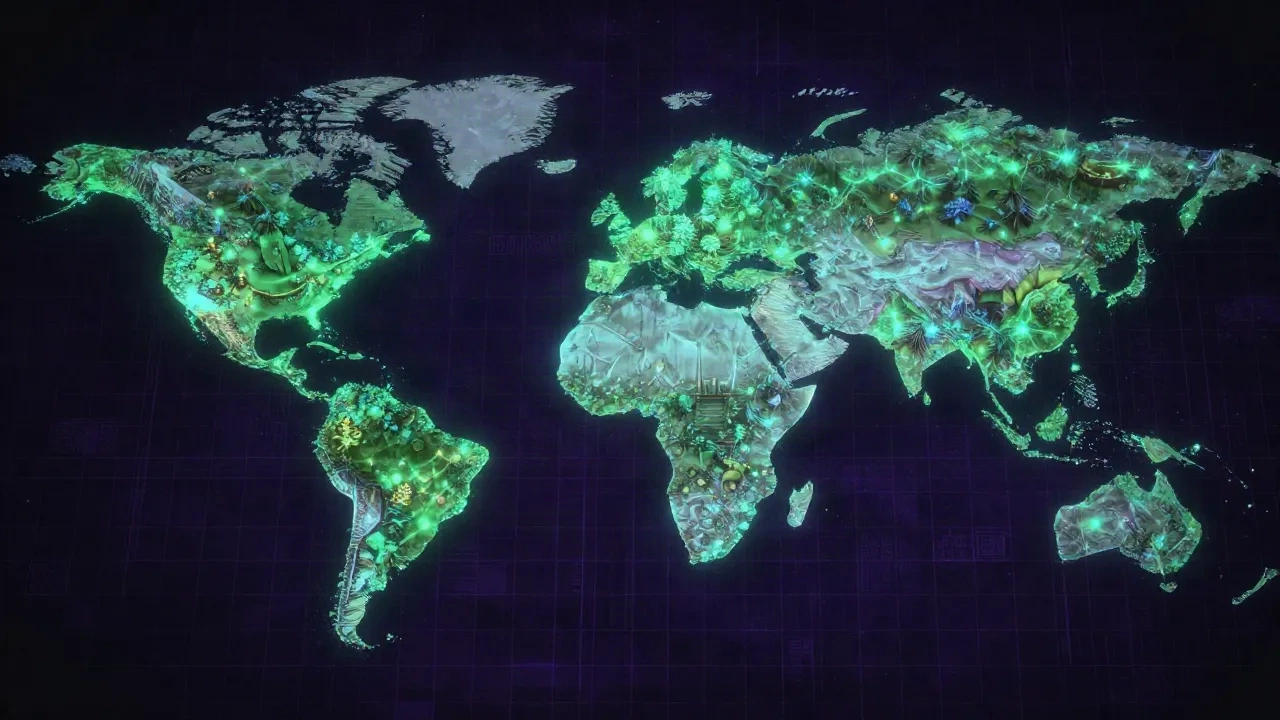
I had 12 environment tiles to populate for a 40-minute walking sim. Each one needed different terrain, different mood, a reason for the player to keep walking. Placing assets by hand would have taken two weeks. I used a procedural system for the first time instead. It took three days to set up and four hours to generate. Here is what I learned about what procedural generation actually is, why the design decisions are harder than the code, and where AI changes the math for solo developers in 2026.
What Procedural Generation Is (and What It Is Not)
Procedural generation is not randomness. That is the most common mistake.
A random system is unpredictable and unrepeatable. A procedural system is deterministic. You give it a seed, a number, and it builds the same output every time. Change the seed by one digit and you get a different world, but that world is still consistent, stable, and reproducible. The same seed, the same result.
The mechanism: a numeric seed initializes a random number generator. That generator feeds into an algorithm, which applies rules. Those rules produce output. Terrain, rooms, loot tables, creature stats, tree placement. Validation checks run to catch broken states. If something fails, the system regenerates that piece.
What procedural generation is not: a way to skip design decisions. You still decide the rules. You still define what counts as valid output. The system executes those decisions at a scale and speed that hand-placement cannot match.
The word "procedural" just means "following a procedure." The procedure is yours.
The Six Algorithms That Actually Power Game Worlds
There are six techniques that appear in almost every procedural generation codebase. Knowing which one you need is the first real design decision.
Perlin and Simplex noise produce smooth, organic terrain. Minecraft uses layered Perlin noise. Stack multiple noise functions at different scales and you get the mountain on the horizon plus the rock at your feet, all coherent. No Man's Sky uses this approach for planetary surfaces, which is how 18 quintillion planets can each feel geologically plausible without a single designer placing a ridge by hand.
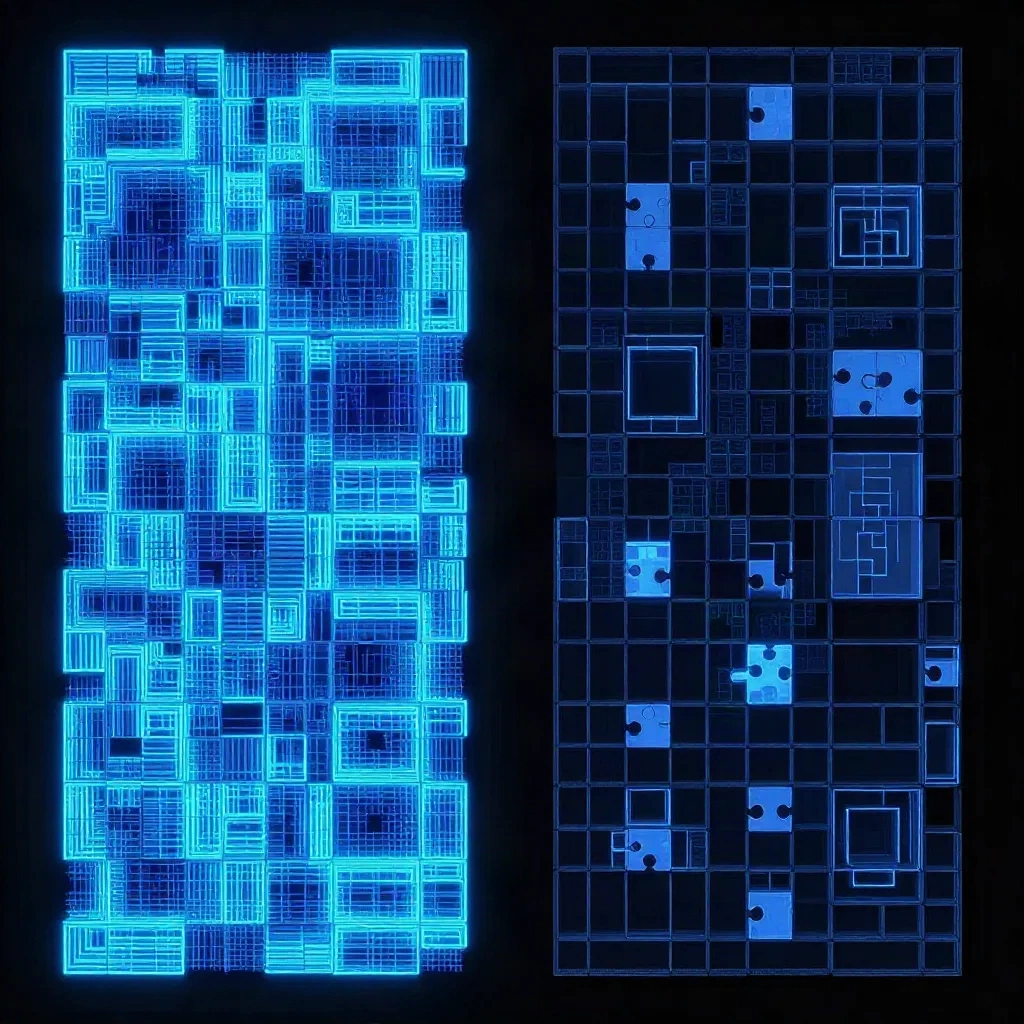
Wave Function Collapse works by learning. You show the algorithm a sample of valid tile arrangements. It extracts the adjacency rules from your example and generates new arrangements that respect those rules. A WFC dungeon never places a wall tile next to a doorway because it learned, from your sample, that those two tiles never appear together.
Cellular automata generate cave systems. Each cell checks its neighbors. Apply rules about how many neighbors a cell needs to survive or die. Run the simulation for several iterations. The result looks like a hand-carved cave system, organic and irregular, produced by six lines of code.
Binary Space Partitioning divides a rectangle recursively into smaller rectangles, then places rooms inside them. Classic dungeon generation. Fast, readable, and structurally predictable in ways that cellular automata are not.
L-systems create branching structures. Rivers, trees, root networks. Grammar-based: a simple starting symbol expands through replacement rules until you have a full plant or a river delta with tributaries.
Markov chains string together probable sequences from training data. Quest text, NPC dialogue, item names. The output sounds like the training data without being identical to it.
Why No Man's Sky and Minecraft Got Opposite Things Right
Minecraft did not try to generate interesting things. It generated infinite terrain and let players decide what was interesting. The procedural system makes the canvas. The player makes the meaning.
No Man's Sky took the opposite approach. 18 quintillion planets, each with procedurally generated terrain, creatures, flora, and weather systems. The engine tries to generate variety that is inherently interesting. That is a harder problem, and No Man's Sky's first year showed exactly why. Variety without curation reads as sameness at scale.
Spelunky understood this better than either. It assembles hand-designed room chunks in procedural order. Every run is different. Every room was designed to be survivable and fair. The system provides variation. The designer provides craft. No amount of generation makes up for rooms that were never designed to be fun in the first place.
This is the constraint that most tutorials about procedural generation skip. The algorithm is easy to write. The rules that make the output playable take the work. You are not replacing design decisions. You are executing them faster.
Where AI Enters the Pipeline and What It Actually Changes
Traditional procedural generation follows only the rules you write explicitly. It cannot exceed them. AI-powered generation changes that ceiling.
A neural network trained on design patterns understands context without you writing that context as code. It knows a gothic mansion should have narrow corridors. It knows a desert level should not spawn dense forest tiles. Those inferences come from patterns in training data, not from rules you specified. You describe intent. The model infers constraint.
The production numbers from 2026 show what this means at scale. Inworld AI built 500 conversational NPCs in the time it previously took to script 50. Scenario.gg generated 10,000 game items with icons and descriptions in six weeks: a task that would have taken six months manually. Environment dressing that once required 80 hours of artist time now takes a fraction of that with AI-assisted prop placement.
What actually changed is not speed. The algorithms were always fast. What changed is the curation layer. In traditional procedural generation, the most expensive part is the validation rules: the constraints that catch bad outputs, the weighting that prevents boring repetition, the adjacency logic that keeps the world readable. AI handles a meaningful portion of that automatically now, because the model learned what "bad output" looks like from examples rather than from code you wrote.
For a solo developer, this matters because curation was the part that required either a large team or an enormous amount of iteration time. The entry cost dropped.
What a Solo Developer Can Build in One Evening
I ran my 12 tile environment through a procedural system using seed-based Perlin noise for height maps and a custom constraint layer to prevent certain tile adjacencies. The constraint layer took the most time to write. Not because it was complex, but because I had to think carefully about which combinations broke the mood I was designing toward.
That thinking is design work. The algorithm executes it.
Where I saved time: I generated 40 variants of the environment in 10 minutes. I kept three. The seven hours I would have spent manually placing terrain and assets became an hour of reviewing outputs and selecting the ones that served the story I was telling.
The prompt becomes the seed. Your constraint rules become the design document. The output is a first draft. You edit.
What you do not save: the craft of knowing which three variants to keep. That judgment is not automated yet. The tool gives you volume. You provide the eye that knows what the world is supposed to feel like.
A GDC 2026 survey reported that 51% of game developers intend to use AI for level design within two years. The same survey flagged that human designers remain responsible for narrative structure, pacing, and player motivation: the things no procedural system generates.
The Fork Is the Feature
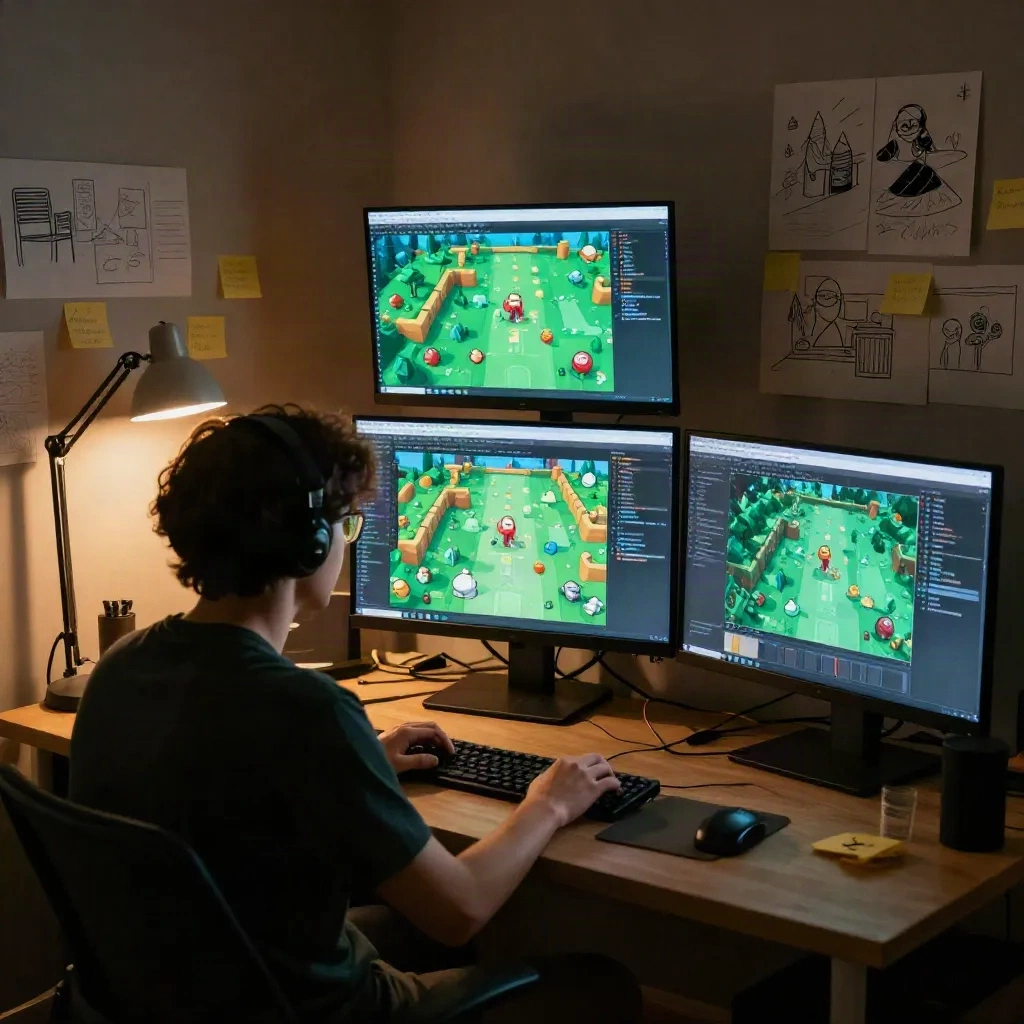
The most useful property of seed-based procedural generation is not scale. It is forkability.
a foggy 1920s Detroit jazz club where the bartender is a robot
That prompt is a seed. The world it generates is deterministic from that description. Change one word:
a flooded 1920s Detroit jazz club where the bartender is a robot
Now you have a fork. Same structure, one variable shifted, entire mood changed. The floorplan is different. The assets scatter differently. The atmosphere the engine builds around that single adjective shift is completely new.
Forkability means your world is a branch point, not a dead end. Every generated output becomes the starting point for a variation. You test the fork, keep what works, discard what does not. This is the creative loop that prompt-native game engines are building their workflows around.
In traditional game development, forking a world means rebuilding assets, renegotiating with the engine, losing hours. In a seed-based system, forking is the intended operation. "Fork it. Change one thing. See what happens." That sentence describes a full creative pipeline.
What Still Breaks (and Why Human Judgment Is Not Optional)
Procedural generation fails in predictable patterns. Knowing them in advance saves time.
Scale without density. A generated world that is enormous but contains nothing surprising within a 10-minute walk. The algorithms populated it, but nothing in the rules required interesting proximity. The space feels empty because you generated area, not experience.
Coherence without meaning. Every biome generates correctly. Transitions are smooth. But there is no reason to travel between them. The procedural logic handles adjacency. It does not handle motivation. Players do not walk toward terrain. They walk toward questions they want answered.
Repetition at scale. Wave Function Collapse generates coherent tiles. But if your sample set was too small, players recognize the patterns after an hour. The system is executing correctly. The problem is the input you gave it. Garbage in, coherent garbage out.
Narrative collapse. A procedurally generated history can fill a wiki. It cannot fill a story unless a designer shapes it. Dwarf Fortress generates entire world histories with emergent narratives, but those narratives are only legible because players know how to read them. The system does not write the story. The player assembles it from data.
None of these failures are arguments against procedural generation. They are arguments for using it with clear intent: know what you are trying to generate, why, and what you will do with the output. The tool is only as purposeful as the design behind it.
The Seed Is Already Running
Procedural generation has been a standard tool in game development since the 1980s. What changed in 2026 is the entry point.
You used to need a programmer to write constraint logic. Now you describe the constraint in plain language and the model infers the rules. You used to need an artist to tell the system which tiles were valid neighbors. Now you show the model examples and it learns the adjacency rules itself. The technical floor dropped. The design floor did not move.
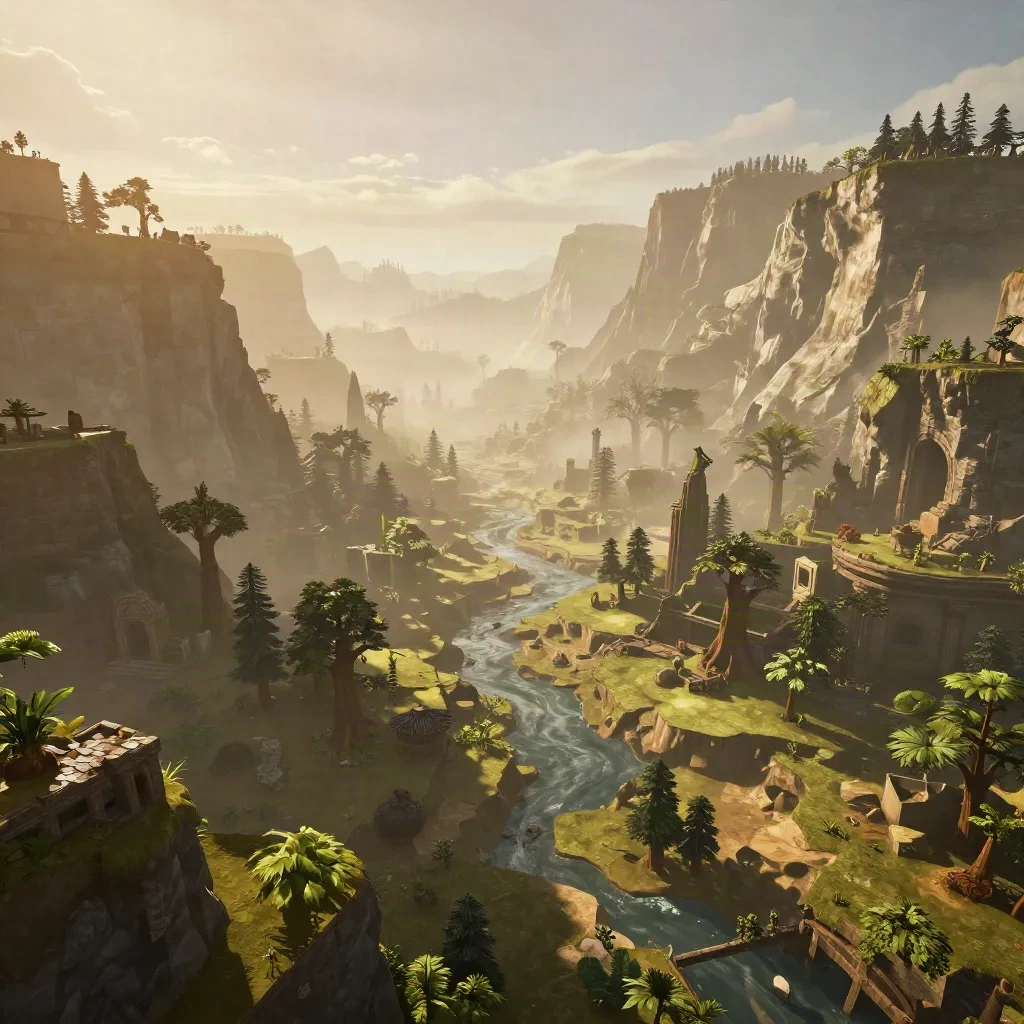
The world in your head is still the hardest part to make real. Procedural generation does not close that gap automatically. It closes the production gap: between designing a world and having playable geometry for it. Between one environment variant and forty. Between a seed and a fork.
The distance between the prompt and the playable world is shorter than it has ever been. Not instant. Not automatic. But one evening, one working description, one run of the seed.
Type the fog. Set the era. Run the engine. Then fork once and see what shifted.