Fanfic Ideas Built From One Broken Rule, Not a Trope
Summary
The best fanfic ideas come from breaking one rule of the world you already know, then following the consequences honestly. This guide gives you a four-line index card method, ten ready seeds from oaths with a price to a quiet year canon skipped, advice on canon gaps and crossovers, and tools to stress-test a premise before you spend a month writing it.

The first fanfic ideas worth writing rarely come from a prompt list. They come from one broken rule in a world you already know cold: the magic costs something, the war ended early, the narrator lied. Pick a rule, break it, and follow the damage through three scenes. That gives you a plot, a voice and a reason to keep going. Below is the method, ten ideas built with it, and a few ways to test them before you commit a month of evenings.
Why trope lists run dry by Tuesday
I have a folder of saved prompt lists. Two hundred "enemies to lovers" scenarios, a hundred "A is an assassin, B is the target" setups. I have written exactly none of them.
The problem is not the lists. Search the term and the results are almost all Tumblr dumps, Reddit threads and Pinterest boards of one-line scenarios. They hand you a situation. They do not hand you a reason to care about it, and a situation with no pressure behind it collapses by chapter two.
You are not short on ideas. You are short on constraints. A good idea has something pushing back.
Change one rule and follow the damage
Every fictional world runs on rules. Some are written (a spell needs a wand), some are implied (nobody in this city ever mentions the river). A fic idea is what happens when you change exactly one of them and refuse to cheat on the consequences.
The method fits on an index card.
Name one rule of the source world in a single sentence.
Flip it, remove it or make it expensive.
Ask who gets hurt first, and who profits.
Write the scene where that person notices.
Here is the card for a heist-adjacent fandom:
Rule: the crew never kills.
Break it: one member kills in chapter one and nobody else knows.
Hurt first: the planner, who now has to keep two sets of books.
The scene: she corrects a map that was never wrong.
That is a whole story in four lines. Notice what is missing: no relationship tag, no trope name. Those can arrive later and they will fit better.

Ten fanfic ideas built from one broken rule
Use these as seeds, not scripts. Swap in your own fandom and keep the shape.
The oath has a price tag. Promises are binding law in this setting, and a character finds out each binding drains whoever swore it. Every vow in canon now looks like a slow confession.
The mentor never died. Skip the grief arc. The mentor lives, and the protagonist has to grow up while still being corrected.
The villain wins the first act. Write the occupation, not the rebellion. Who keeps the bakery open under the new flag?
Canon is an unreliable report. The events happened, but you are reading the official account. Write the version the archivist suppressed.
The side character gets the camera. The guard who opens the gate in chapter three has a name, a shift schedule and a very bad week.
Technology arrives early. Hand the medieval kingdom printing, or the starship crew a functioning postal service. Watch the power structure react.
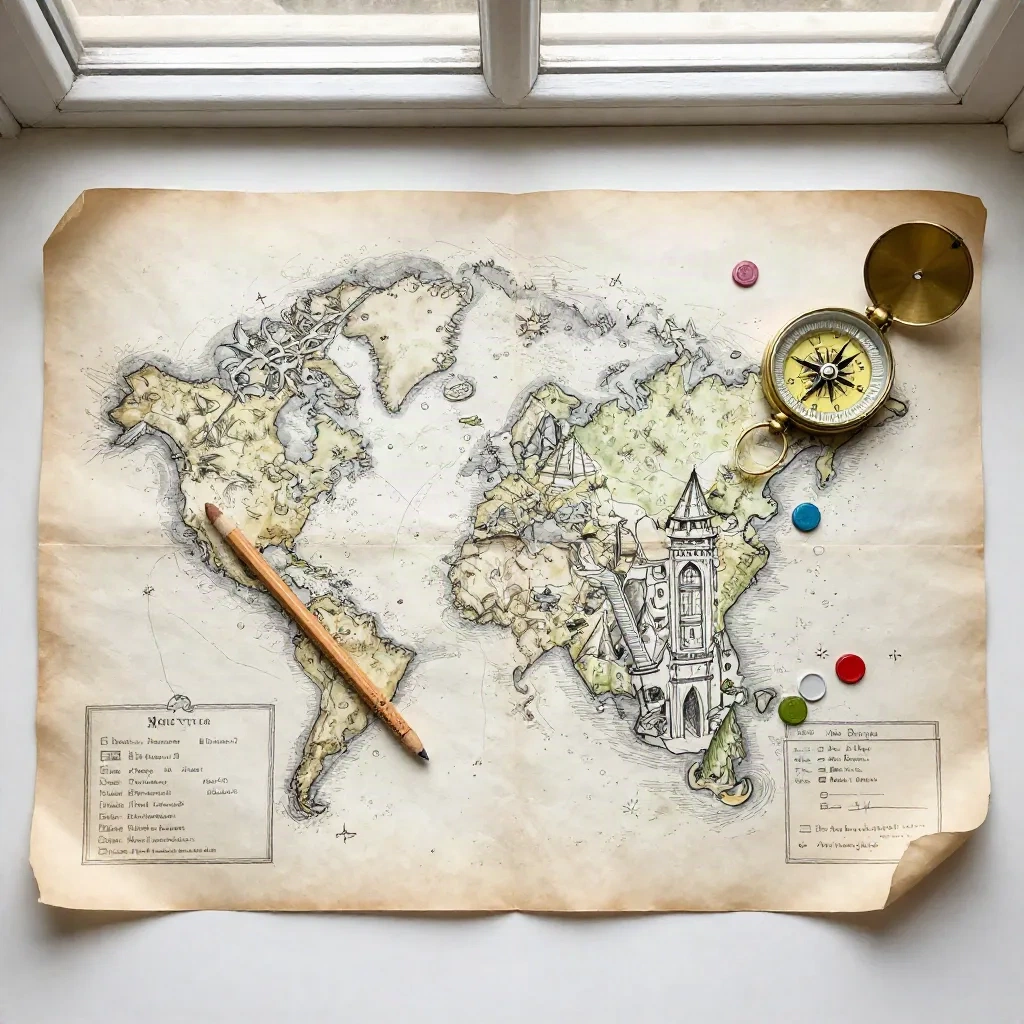
The map is wrong. One region of the canonical map was drawn by a liar. Send your cast to the blank space.
Everyone remembers the reset. After the time loop breaks, one person keeps the memory and has to live next to people who do not.
A rule that was a joke is law. The throwaway gag from episode four becomes the constitution of a new society.
The quiet year. Pick the stretch canon skips (the winter between books, the trip nobody shows) and make it the whole story.
Each of these has a built-in cost, which is the point. Cost is what turns a premise into scenes.
Steal the gap between scenes
Canon is edited. Somebody cut away right before the interesting part, and that cut is free real estate.
Look for the three kinds of gap. The time gap (what happened in the six months after the finale). The room gap (what was said in the corridor while the camera followed someone else). The motive gap (why a character made a choice the story never explains).
The motive gap is the richest. If a decision in canon felt thin to you on first read, that itch is your idea. Write the explanation you needed. You do not have to agree with the author. You only have to be more specific than they were.
A worked example, start to finish
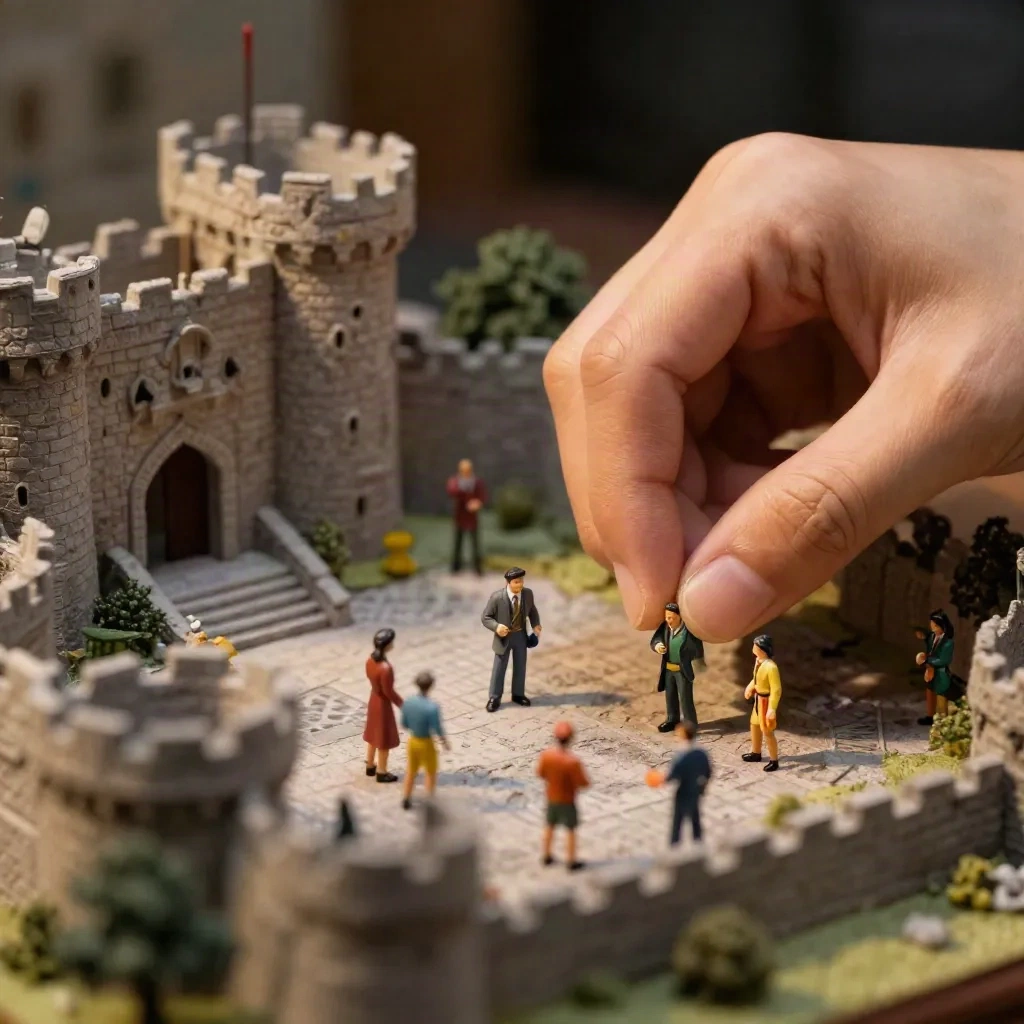
Take a fandom with a strict honor code: knights who cannot lie. Rule: nobody in the order can lie. Break it: one knight has been lying for years and nobody has noticed.
Who gets hurt first? Not the liar. The squire, who has been taught that the order's word is the only fixed point in a bad world. The first scene writes itself: the squire catches a small inconsistency in the knight's account of a border skirmish, and decides it must be the squire's own memory that is wrong.
Now you have a point of view, a secret, a slow reveal and an emotional engine, and you have not chosen a pairing or a genre tag. The second scene is the knight noticing the squire has noticed. The third is the knight deciding whether to correct the squire's doubt or feed it. That is a fic.
Compare that with the list version, "knight has a secret". Same idea on the surface. One has a hook for every chapter. The other has a label.
Voice is half the idea
Two writers can take the same broken rule and produce unrelated stories, because the camera sits in a different head. Before you write, decide whose eyes you are borrowing and what they refuse to notice.
A character who refuses to notice the obvious gives you tension for free. A narrator who knows more than the cast gives you irony. A narrator who knows less gives you mystery. Pick one on purpose.
Read your three planned scenes aloud, in that voice. If you stumble, the voice is wrong, not the idea.
Crossovers work when the physics disagree
Most crossover pitches fail because the two worlds are politely compatible. Nobody has to give anything up. The heroes meet, compare notes, fight a third party and leave.
Pick two worlds whose rules cannot both be true. A setting where death is permanent meets one where it is a scheduling problem. A world run on bureaucracy meets one run on prophecy. Put one character from each in the same room and make them negotiate what is real.
This is also where a world sketch earns its keep. Write the one-line premise, then run it through a world generator and see what comes out. For example:
a tidal city where every contract is sworn to the moon, and the moon has started to forget its debtorsOn a tool like AuxWorld, that kind of line becomes a place you can walk through in about 30 seconds. Treat it as a sketch, not canon. What you want from the first pass is the thing you did not expect, the street layout or the weather you would never have written yourself. Then fork it, change one rule and look again.
Test the idea before you give it a month
Fanfiction is not a niche hobby you are sneaking into. The Organization for Transformative Works says AO3 now hosts more than 18 million fanworks. Whatever you are about to write, someone has probably written an adjacent version. That is fine. It means the question is not "is this original" but "is this specific".
A cheap stress test: describe the premise in two sentences to a collaborator, human or machine, and ask what the third scene is. If the answer is generic, the idea has no cost built in yet. Go back to the index card.
A few tools make that test faster, and each does a different job.
For drafting scenes in your own voice, Sudowrite is built around fiction and has a Story Bible that holds your premise while you write. It is a fiction-only tool, so do not expect help with anything outside the story.
If your fic is long and the canon is dense, Novelcrafter's Codex works like a continuity editor. You list the characters, places and rules, and it feeds the relevant ones to the model before each scene. Setup takes time, and you pay for the model separately if you bring your own key.
To feel how your broken rule behaves under pressure, play it. Hidden Door runs story games inside licensed and public-domain worlds with a narrator keeping the setting honest, which is a decent proxy for "does this premise hold if someone else pushes on it".
And if you want zero scaffolding, AI Dungeon takes any premise and improvises. It drifts over long sessions, so use it for the first three scenes, not the whole fic.
What I would skip
Skip any idea that depends on two characters being unusually stupid for the plot to work. Skip "canon but everyone is in a coffee shop" unless the coffee shop changes a rule. Skip premises you cannot summarise without naming a trope, because the trope is doing the work the idea should be doing.
And skip the urge to outline everything. Three scenes is enough to know if an idea has legs. Everything past that is a bet you place by writing.
Which one do you write first?
Open the list of ten again and cross out the ones you feel nothing about. Of the rest, pick the one you could argue about at a bar for an hour. That is the one with a rule in it you actually care about.
Then write the card. Four lines. Rule, break, who gets hurt, the scene.
Fork it. Change one thing. See what happens.