7 DnD Campaign Ideas That Finally Break the Tavern Habit
Summary
The best dnd campaign ideas start with a situation, not a setting: someone wants something, something blocks them, and a clock is running. This guide gives seven campaign seeds, from a famine mill to a map that grows back, plus how to match one to your table, write an opening that lands in ten minutes, and prototype your world in one evening without a 30-page bible.
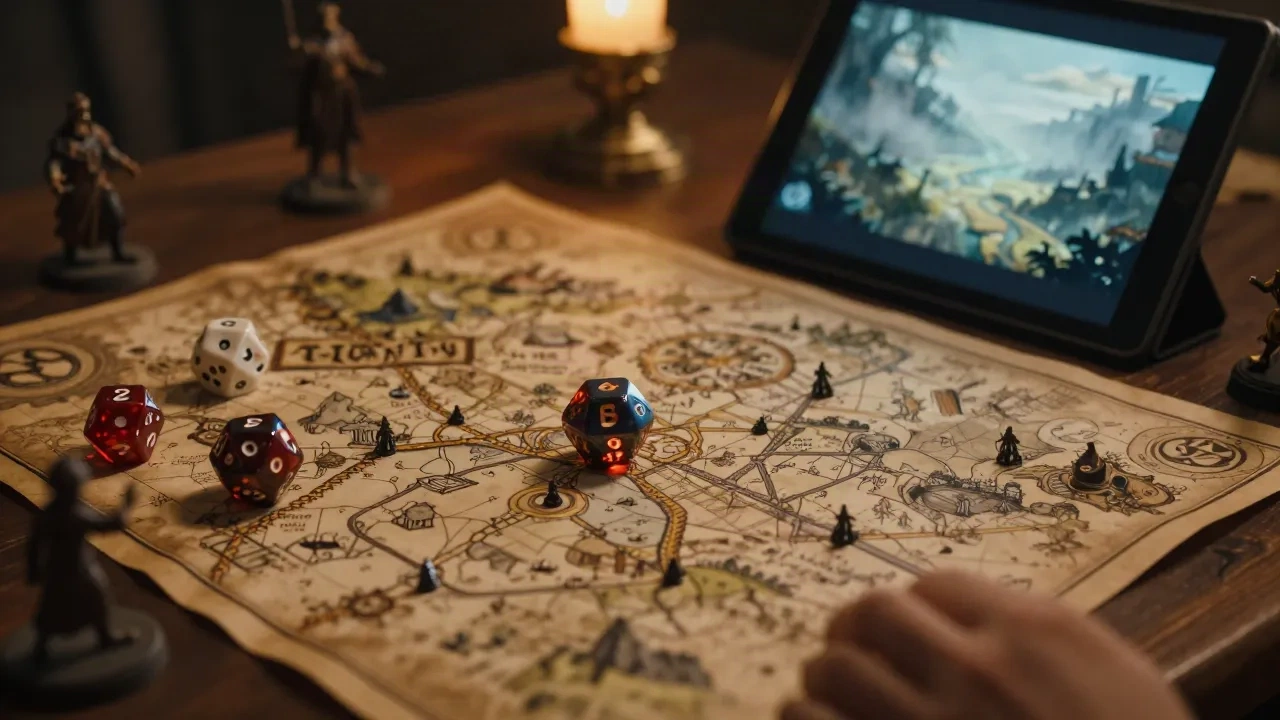
Good dnd campaign ideas start with one sharp question, not a map of forty kingdoms. Ask what the party will care about by session three, then build only what answers it. Below are seven campaign seeds, the hook for each, and a way to prototype the setting before your players show up.
I have sat on both sides of the screen. The campaigns that survived past session five were never the ones with the thickest binder.
Why does your campaign idea stall before session one?
Because it is a setting, not a situation. "A dying empire with seven houses" is a setting. "The empire's grain ships stopped arriving and the party owns the only mill" is a situation.
A situation gives players something to push against on turn one. A setting gives them homework.
Strip your idea down to three things: who wants something, what stands in the way, and what happens if nobody acts. Everything else can be improvised at the table. LegendKeeper's campaign guide makes the same point from a different angle: pick a few inspirations you and your players love, name the feelings you want, and give the party a shared goal.
Skip the 30-page world bible. Nobody will read it, including you.
Seven dnd campaign ideas worth running
Each seed below is built around a pressure, not a plot. Plots break the moment the rogue does something unexpected. Pressure survives.
1. The last mill. A famine campaign. The party inherits the only working grain mill in a valley where three factions are starving politely. Every session is a decision about who eats. Skip it if your table wants combat every hour.
2. The tour that never ends. An evil bard tours the continent with a growing fanbase of undead. The party follows the route, one town behind. It reads like a road movie with a body count, and it works in almost any setting.
3. The flooded city. The sea took the lower districts and the survivors built upward. Rooftop politics, rope bridges, boats in the old streets. It gives you vertical exploration without a single dungeon.
4. The borrowed god. The party's patron deity is fading and needs mortal prayers to stay alive. Players choose which values to keep alive, and the world slowly reshapes around those choices. Worth the effort if your players enjoy moral weight more than loot.
5. The heist that rewrites itself. A vault, a crew, a plan. Each session the vault changes because someone in the party told a lie. Great for tables that love planning and hate being railroaded.
6. The border war nobody declared. Two small towns, one disputed bridge, and a pile of old grudges. No dragons. The campaign ends when the bridge does, and that can take twelve sessions or two.
7. The map that grows back. Every time the party explores a region, it changes behind them. Players quickly learn that revisiting is a mistake and a gift. It is a good fit for long, strange campaigns.
How do you pick the one that fits your table?
Run a five-minute poll before session zero. Ask each player for one thing they want more of and one thing they are tired of. Then match.
Combat-hungry table? Take the border war or the tour. Players who love talking? The last mill or the borrowed god. Planners? The heist.
Do not pick the idea you find most clever. Pick the one your quietest player leaned forward for.
The poll also protects you from the classic trap: building a gorgeous campaign for the table you wish you had. If three of your four players have never played a political game, a seven-house succession crisis will fall flat no matter how good your notes are.
What makes a hook land in the first ten minutes?
Put the players at the problem. A Black Citadel guide to one-shots puts it bluntly: wherever your adventure begins, put the players there. Skip the quest giver, skip the travel montage.
Three things make an opening hold:
A clear goal in one sentence: rescue, steal, stop, escape, escort.
A ticking clock, even a soft one. The ritual finishes at dawn. The flood arrives in three days.
One decision with a cost in the first scene, before anyone has rolled initiative.
The tavern opening is not forbidden. It just does nothing on its own. If you start in a tavern, start it already on fire.
Should you prototype the world before you run it?
Yes, but lightly. The goal is to find the three images your players will remember, not to finish a world.
Here is a workflow that fits one evening:
Write the situation in two sentences.
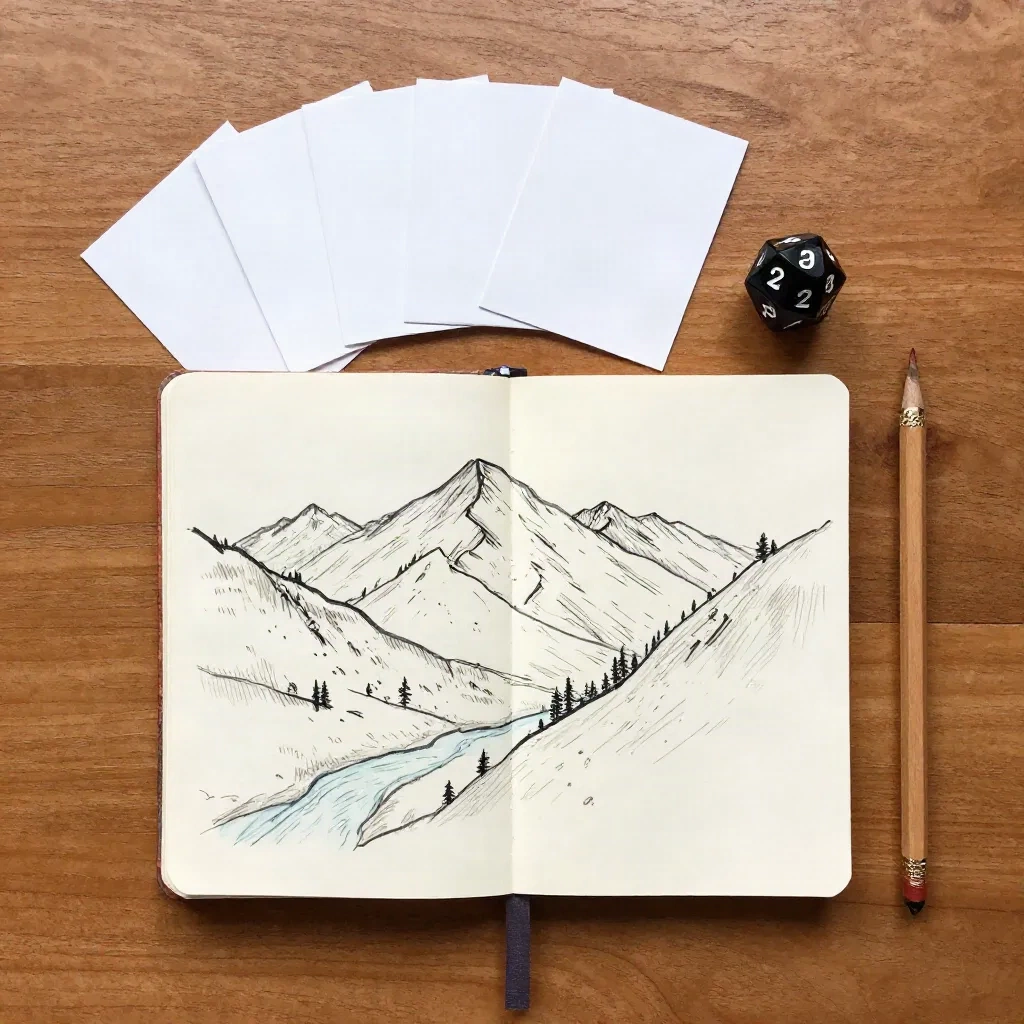
List five locations on index cards, one adjective each.
Pick the one place the first session happens and describe it in detail.
Leave the rest blurry on purpose.
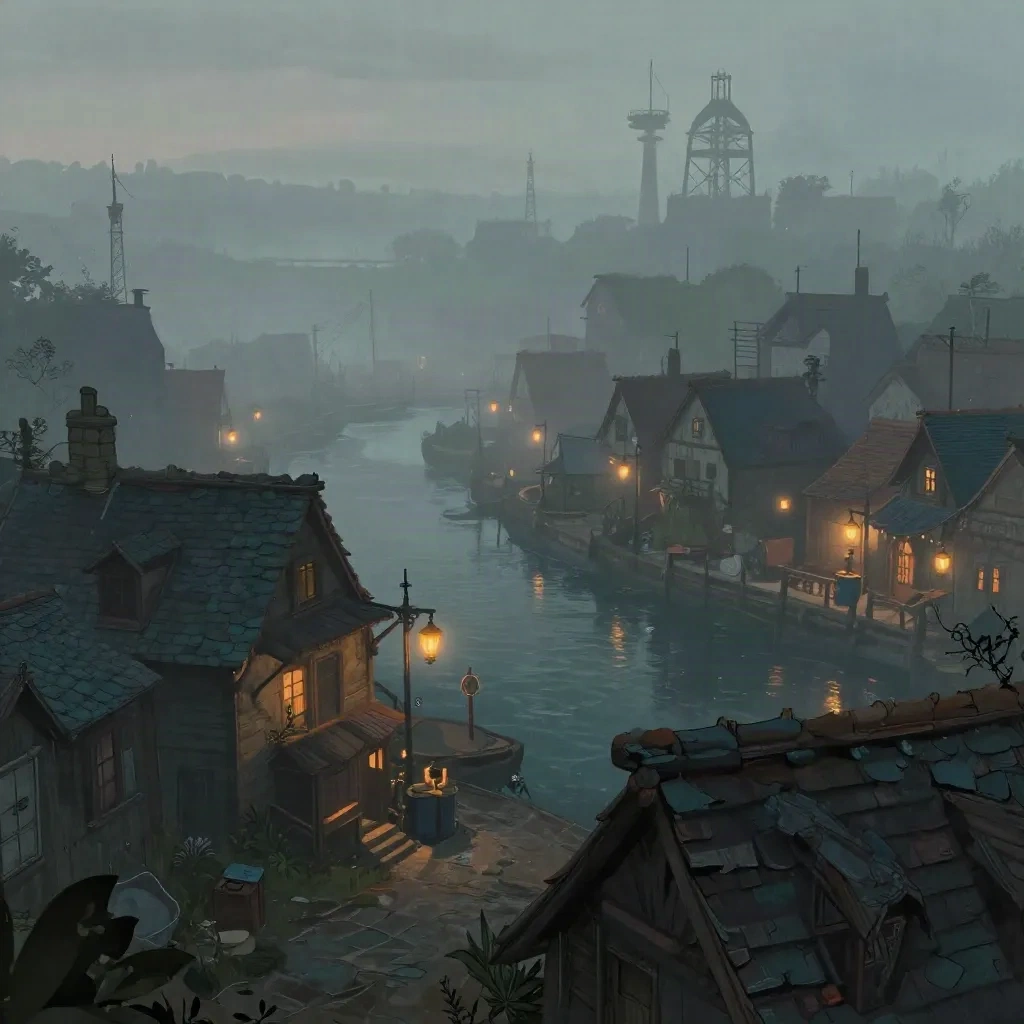
This is where generation tools earn a spot at the table. You describe a place, you get something to react to, and your own judgment does the editing. A prompt like this one is a starting point:
a flooded river town at dusk, rope bridges between rooftops, lanterns, fog, a half-sunken temple bellRun it, see what the engine adds that you did not ask for, and steal the best accident. That is how a one-line prompt becomes a location with weather. At AuxWorld we build tools for that loop, where you describe a place and walk around inside it. We are not claiming it replaces your prep, and some features are still in beta, so check what is live before you plan a session around it.
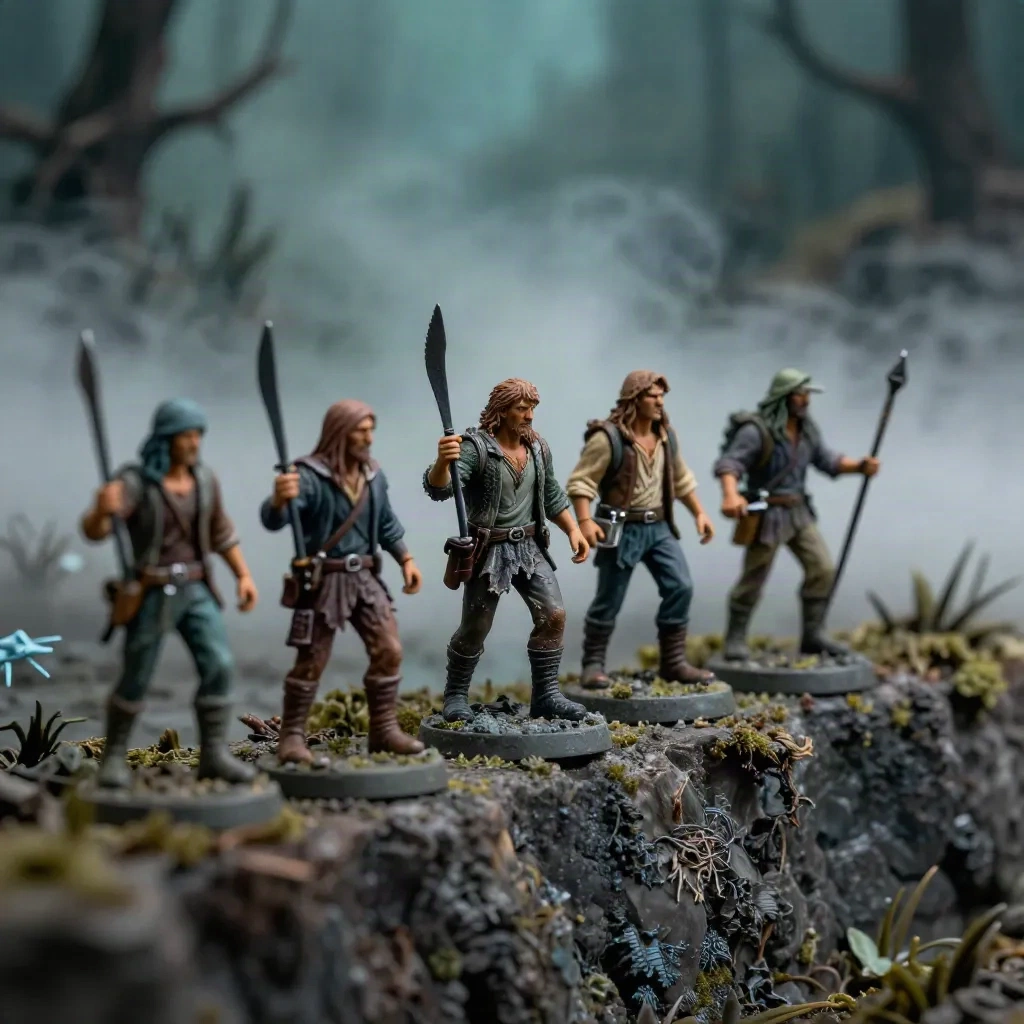
Whatever tool you use, the rule is the same: generated material is a draft. Fork it, change one thing, see what happens.
If you want character portraits and location art for handouts, an image generator with many models is the quickest route. Keep the style consistent across a campaign, because five different art styles make a world feel like five worlds.
Which tools help once the campaign is running?
Keep the stack small. Every extra tool is something you must open mid-session while players stare at you.
Voices are the one upgrade that changes the room. A recorded line from the villain, played at the right moment, does more than three paragraphs of description.
If you want a short cinematic for the campaign opening, a video model can turn a still map or a location image into a ten-second moment. Use it sparingly. One cold open per arc is plenty.
Skip anything that asks you to rebuild your notes in a new format. The best campaign tool is the one you stop noticing.
How do you build a villain and factions without a spreadsheet?
Give every faction one want, one fear, and one thing they would never say out loud. That is enough to improvise a whole scene.
For the last mill, the three factions might be the river guild, the garrison, and the hungry hill farmers. The guild wants the mill's grain tax. The garrison fears a mutiny. The farmers will never admit they already tried to burn it. Three lines each, and you can run a month of sessions.
A good villain is a person with a deadline. The bard with the undead fans wants a bigger crowd by midsummer. The flood city's harbor master wants the upper districts sealed before the next tide. Deadlines turn lore into scenes, because something has to happen on a date and the party decides whether it does.
Skip the villain who monologues about the past. If the party has to dig for a backstory, they will either love the mystery or ignore it. Both are fine. A backstory delivered as a lecture is the only version that fails every time.
What should you do in session zero?
Keep it under an hour and make it about people, not rules. Cover three things:
The tone: grim, funny, tender, or a mix. Ask for one movie or book as a reference.
The lines: what stays off the table, no explanation required.
The shared reason the party stays together. "You all owe the same person money" works better than "you met in a tavern".
Then give each player one question about the world to answer. Who ran the ferry before the flood? What did the old god ask of the first priest? Their answers become the details you could never have invented, and they care about them from minute one.
You will also learn who wants to be a hero and who wants to be a problem. Both are useful. Write it down.
How long should a campaign run?
Shorter than you think. A Black Citadel breakdown of one-shots suggests four to six hours and four to six encounters, which is a useful yardstick even for a single arc of a longer game.
Plan a campaign as a series of arcs of three to six sessions. At the end of each arc, ask the table if they want to continue, pivot, or end. Players who know there is an exit stay more engaged than players who feel trapped in a forty-session promise.
Some of the best games I have heard about ended at session eight, on purpose, with everyone happy.
What would we actually run?
If you have one free evening to prep, run the last mill. It needs almost no lore, it creates arguments instantly, and every choice has a visible cost.
If your group likes strange worlds, run the map that grows back. It rewards curiosity and punishes routine, which is a rare combination.
Whichever you choose, write the first scene tonight. Put the players at the problem. Then close the notebook and let the table make the rest.