Celtic Mythology Creatures for Your Next Game World
Summary
Celtic mythology creatures are a design system, not a monster compendium. Each one operates on rule-based logic tied to geography, kinship, season, and behavior. The kelpie drowns riders at threshold points. The banshee warns specific family lines. The aos si negotiate territorial terms. Port these systems into your AI-generated world and your prompt becomes a rulebook, not just a request.
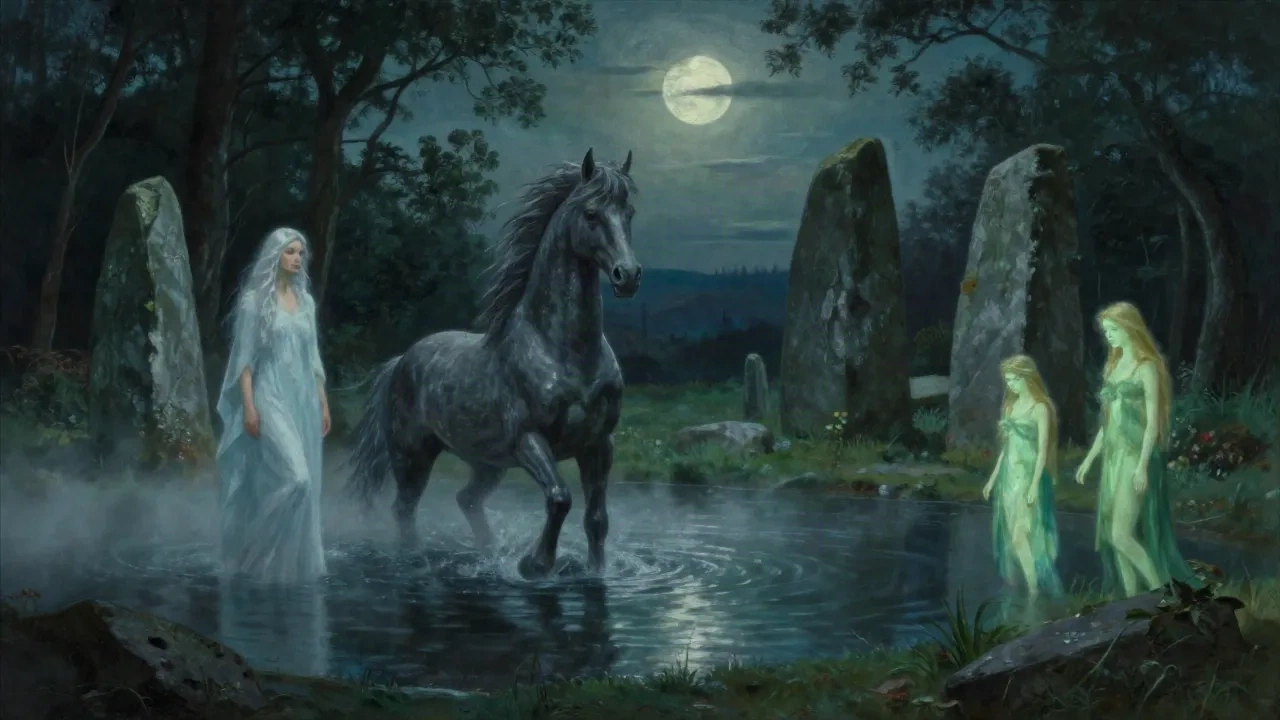
Celtic mythology creatures are not the monsters you think you know. Before the Victorian collectors got hold of them, and before D&D stat-blocked them into hit dice, they were something stranger: behavioral rules for living at a boundary between human and not-human that was a geography, not a metaphor.
That's what makes them worth studying now. Not for the atmosphere, though the atmosphere is there. For the design logic underneath.
This is a field guide for worldbuilders, game designers, and interactive fiction writers who want systems they can actually use.
The System Behind the Creature
Every Celtic creature operates inside a logic framework. Not "weakness equals silver bullet." More like: this being lives at water thresholds; it responds to how you treat it; it marks specific family lines; its power peaks at certain calendar dates.
That's a rule system. Brandon Sanderson would recognize it.
The selkie can transform, but only if her sealskin is intact. The puca shape-shifts constantly, but its golden eyes never change across forms. The kelpie can drown you, but only if you mount it willingly. These are not arbitrarily dangerous entities. They are systems with internal consistency.
For a worldbuilder, that matters more than any amount of lore flavor text. Consistent rules generate player trust. Player trust generates engagement. That's the loop.
Water Creatures: Kelpie, Selkie, Each-Uisce
Three distinct water creatures, three distinct design philosophies.
The kelpie is Scottish. It takes the form of a horse near a Highland loch, mane perpetually wet. It's adhesive on contact: your hands stick to its skin, and it drags you to the bottom. The counter is simple. Don't mount strange horses near water. The rule is clear. The danger is relentless.
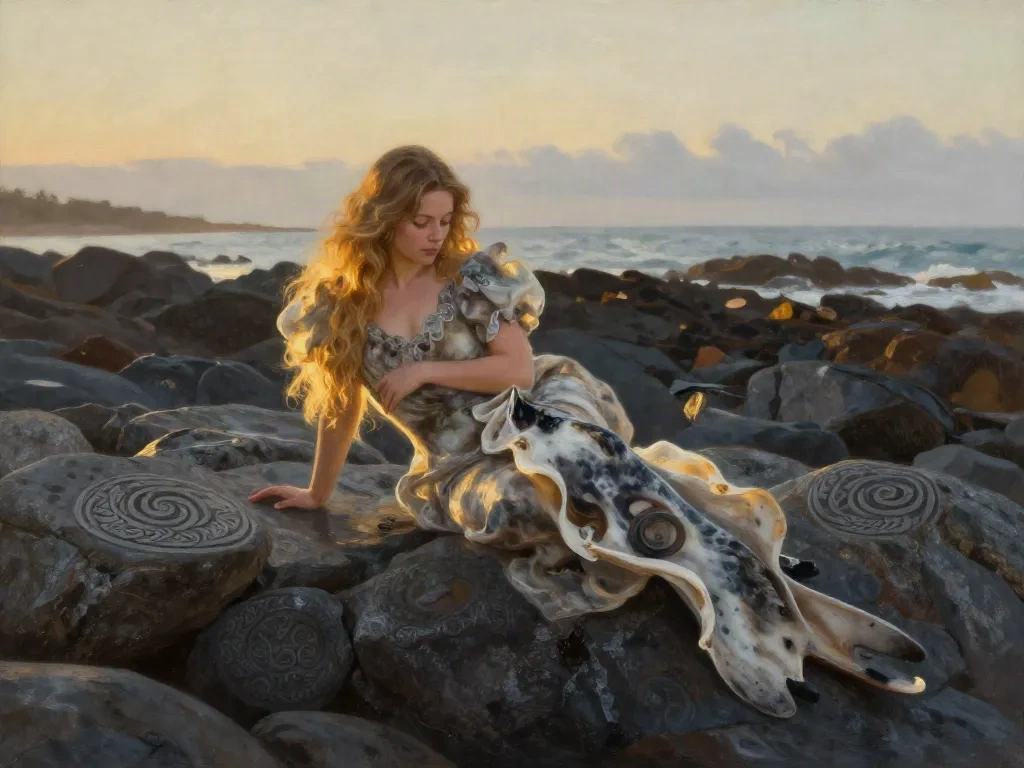
The selkie is Scottish and Irish. A seal on water, a person on land. The transformation is held in the sealskin. Hide the skin, you trap her. The design pivot is consent: selkie stories are almost always about forced captivity and eventual return. That's a worldbuilding layer that goes well beyond standard encounter design.
The each-uisce (Scottish Gaelic: water horse) looks similar to the kelpie but lives in saltwater lochs and is considerably more dangerous. It eats its rider entirely, except for the liver, which washes ashore. That detail appears consistently enough in folklore that communities used it as a verification marker. You can build an entire coastal culture around that one fact.
Three creatures. Same broad category. Three entirely different behavioral systems. That's the density of source material you're working with.
Death Harbingers: Banshee, Dullahan, Sluagh
These creatures share a death-adjacent filing system. They are not the same design.
The banshee (bean si: woman of the fairy mounds) announces death. She does not cause it. She follows specific Irish family surnames. She is perceived through sound, not sight. Her wail is a warning, not a threat. Preparation time exists.
That's a fundamentally different relationship with death than almost any other design tradition offers. Death comes with advance notice. Notice is family-specific. There is a choice about how to use the time.
The dullahan is active where the banshee is passive. He rides with his decapitated head under one arm, uses a human spine as a whip, and calls out the names of the dying. Gold repels him temporarily. No wall, no locked door, no physical barrier stops his passage. He is a collector, not a herald.
The sluagh are the unforgiven dead, traveling as a flock. They target souls of the dying, entering through the west. The protection: close west-facing windows before a person passes. That's a cardinal direction encoded as protective architecture. Build that into your world's construction practices and players will ask why the windows face east. The answer tells them about the history.
The Aos Si: A Race, Not a Monster Type
Most fantasy systems treat the aos si as elves, Irish edition. That's a significant undersell.
The aos si (the people of the fairy mounds) are not benevolent helpers and not hostile monsters. They are a parallel civilization that occupied this land before humans arrived. They have social structures, territories, and standing grievances. Human settlements encroach on their spaces constantly, which explains the tension.
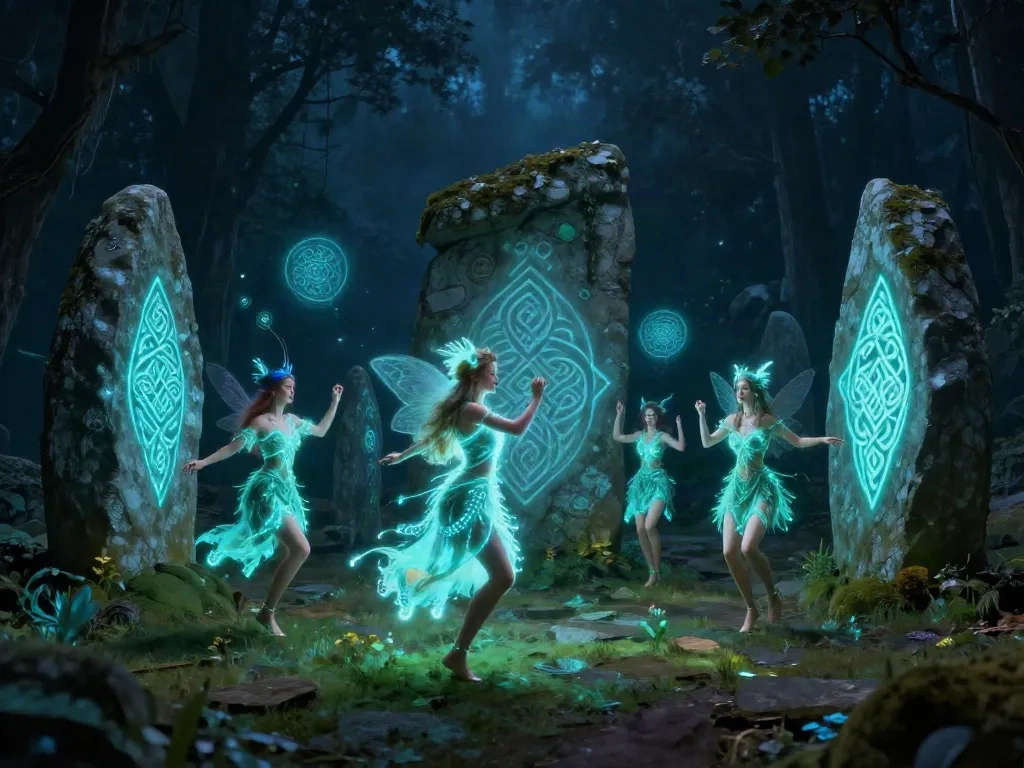
Encounter design with the aos si is territorial negotiation. You left a field unharvested as their share of the harvest. You turned your coat inside-out before walking a fairy path. You addressed them by the correct oblique terms (the Good Neighbors, the Gentle Folk) rather than naming them directly.
The items that interact with them (iron, salt, rowan, bells) are not weapons. They are negotiation protocols. That's an entirely different encounter paradigm than rolling for combat.
The internal factions matter too. The aos si have courts. The Seelie are not uniformly benevolent; the Unseelie are not uniformly hostile. Both operate under codes of behavior that characters can learn and work within. That's a political system, not a monster manual.
Shape-Shifters and the Seasonal Calendar
The puca peaks at Samhain (November 1st). The Cailleach creates winter each year and sleeps each summer. The Fear Gorta appears during famine periods. Brownies abandon a household if offered clothing directly, transforming into something harmful.
Celtic creatures are not static threats on the map. Their activity is seasonal and calendrical. Your world doesn't need a monster spawn mechanic if the calendar itself governs encounter probability. Design the year correctly, and the creatures follow.
The puca takes the forms of horse, goat, cat, dog, and hare, plus a dark-skinned human form. Its disposition runs from mischievous to genuinely dangerous depending on how you've treated it recently. Its golden eyes remain constant across all forms. That's the identification detail. Players remember the eyes. Game masters use the eyes.
One calendar rule: after Samhain, the blackberries the puca has ruined are not safe to eat. Before Samhain, those same blackberries are fine. The seasonal boundary is written directly into what is edible in the world.
The Nuckelavee and Other True Horrors
Not everything in Celtic mythology is negotiable.
The nuckelavee is from Orkney, the Scottish island chain north of the mainland. It's a skinless horse-human hybrid: organs visible, veins visible, muscles working in plain sight beneath no skin at all. Its breath withers crops at distance and kills livestock. It cannot cross fresh water. Some traditions confine it to summer and autumn.
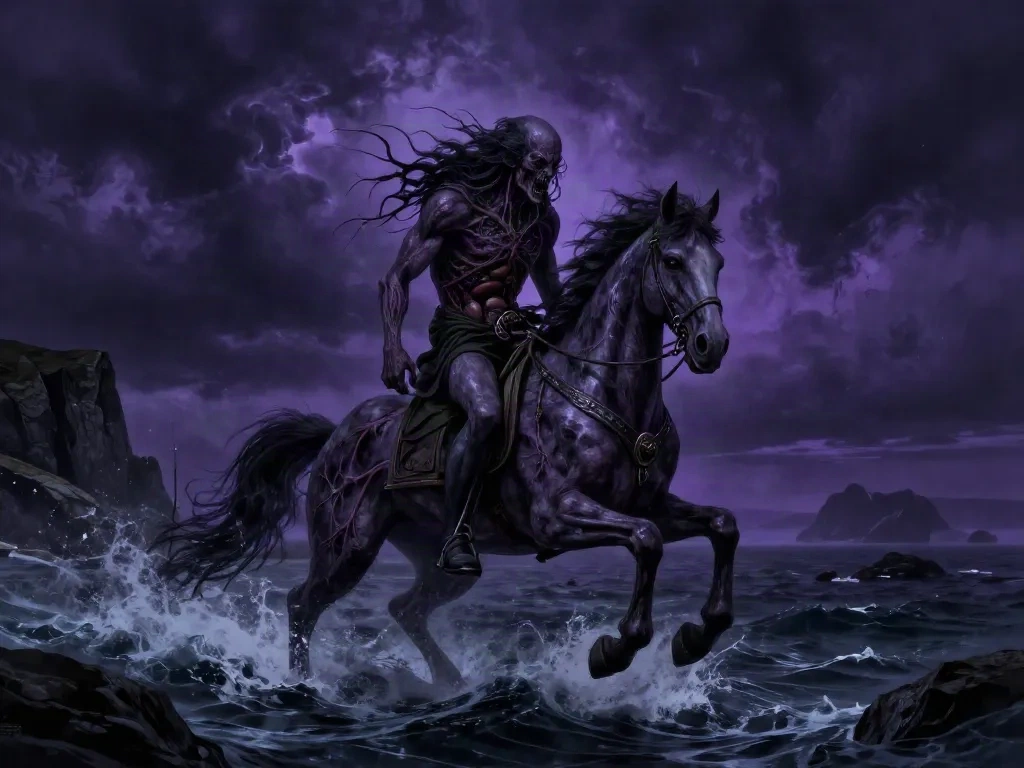
No negotiation. No protocol. The design is pure agrarian horror: a force that makes your farm fail and your animals die, which you can only survive by reaching a stream. That stream becomes the most important piece of geography in a threatened landscape.
The Fomorians are older still. A pre-human hostile race, associated with chaos and deep-time violence. Their king Balor had one eye that could kill an army with a single glance. The Fomorians lost the Second Battle of Mag Tuired against the Tuatha De Danann. They didn't disappear; they retreated. That's a usable ancient-conflict backstory for any AI-generated world that needs a dark history it didn't begin with.
The Abhartach is undead and local to County Derry. It rises from its grave unless buried with a yew-wood sword, face-down, with a stone placed on top. It rises twice before the correct burial procedure finally holds it. That's a multi-step containment protocol for a regional undead threat. The specificity is what makes it usable as design source material.
How to Build Your Prompt from Celtic Source Material
The structural advantage of Celtic creatures is geographic anchoring. Almost every significant one ties to a named place still on a contemporary map.
When building prompts for an AI world engine, geographic specificity generates more coherent results than abstract description. Compare:
a water spirit that drowns people
versus
a shape-shifting horse that haunts a Highland loch pool, mane wet, adhesive on contact, dragging riders underwater into darkness
The second version gives the engine a rule system to work with. The creature's behavior, appearance, and danger are all derivable from the description alone. Fork from that, change one element (saltwater instead of fresh; changes the creature type entirely), and you have a variant with its own internal logic intact.
The seasonal calendar translates directly to world-generation parameters. "Encounter probability increases in late autumn" is a parameter. "Family-line-based death warnings" is a kinship-graph mechanic. "Cardinal direction as protective architecture" is a construction rule.
Build the system, not the creature. The creature is the output.
Four Tools for Worldbuilders Working With Mythology
Celtic source material rewards tools that hold context well and handle open-ended lore development without forcing you into predefined structures.
Your prompt is the first rule. Everything else in the world derives from it. Fork it. Change one thing. See what happens.