AI Video Ideas That Actually Work for Independent Creators
Summary
AI video ideas that work in 2026 share one trait: they use the prompt as a creative constraint, not a shortcut. This guide covers 20+ video formats independent creators are shipping right now, from AI-generated world walkthroughs to fork-and-react series, documentary reconstructions, and multiplayer world experiments. The best ideas give AI the production work and keep the creator's perspective front and center.
AI video ideas are everywhere right now. Most of them are bad. The ones worth trying share a simple property: the prompt does the heavy lifting, but the creator's point of view does the work that actually earns a viewer's time.
This is a field guide to 20+ AI video formats that independent creators, game designers, and worldbuilders are using in 2026 to build real audiences. Not theory. Not listicles padded with filler. What's shipping.
Why most AI video ideas fail before the first cut
The failure mode is consistent. Creator gets access to a video generation tool. Creator generates five seconds of a dragon flying over a castle. Creator posts it. Three hundred views, then nothing.
The problem is not the tool. It is the absence of a point of view.
The formats that retain audiences treat AI as a production engine, not a creative replacement. You still need something to say. The engine just lets you say it faster, at a quality level that used to require a crew.
Skip the "AI made this whole video" angle if you have nothing else. It works once, as a novelty. It does not work as a channel.
World walkthroughs: the format that compounds
The strongest repeatable AI video format for game designers and worldbuilders is the world walkthrough.
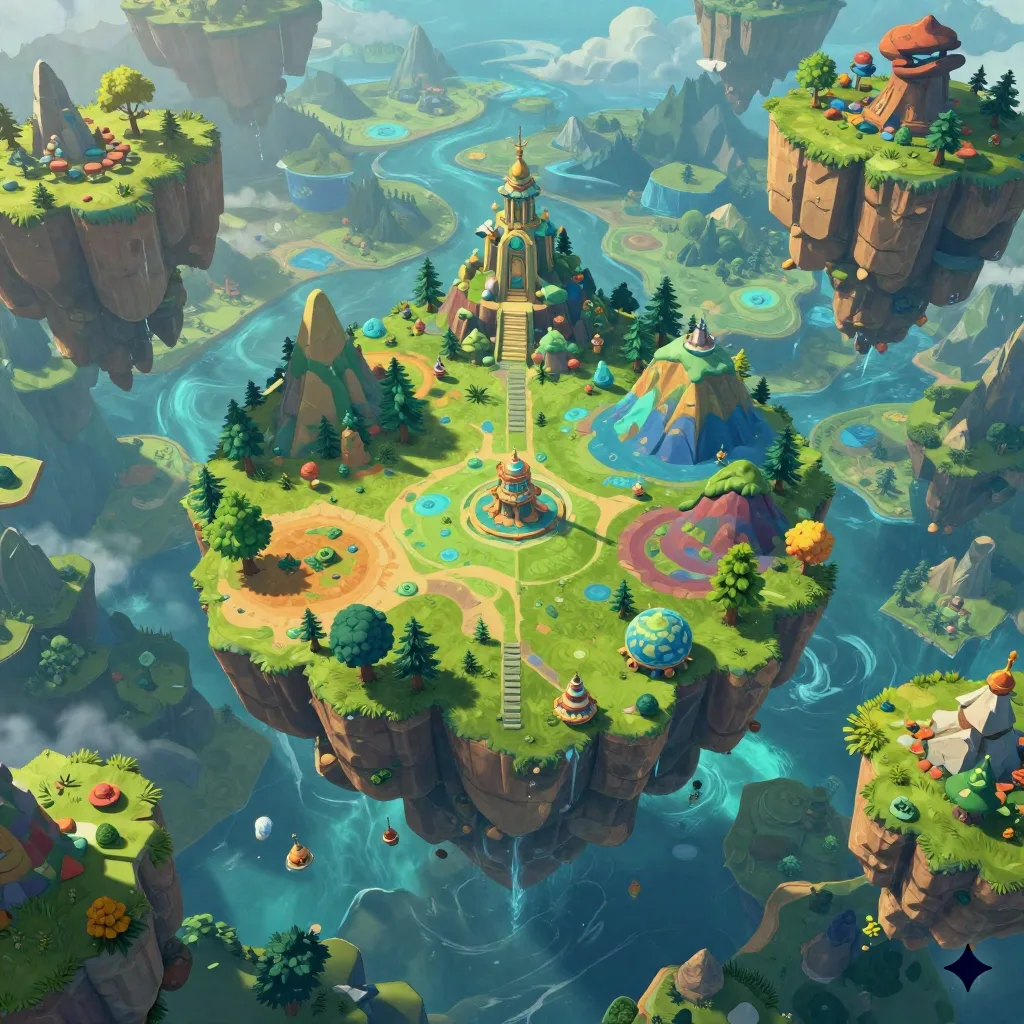
The idea: generate a world from a specific prompt, then walk through it in real time with running commentary. What the engine got right. What it got wrong. What you would change. What surprised you.
a flooded 1920s Shanghai during the monsoon season, with jazz clubs on the upper floors and fishing boats navigating between buildings
That is one prompt. That is also potentially three or four videos: the initial generation, a fork that changes the era, a fork that changes the weather, a multiplayer session where someone else explores the same world.
World walkthroughs work because they are genuinely unrepeatable. No two generations are identical. The commentary is live. The discovery is real.
Fork-and-react: the easiest series format in AI video
Fork-and-react is the AI video equivalent of a cover song channel.
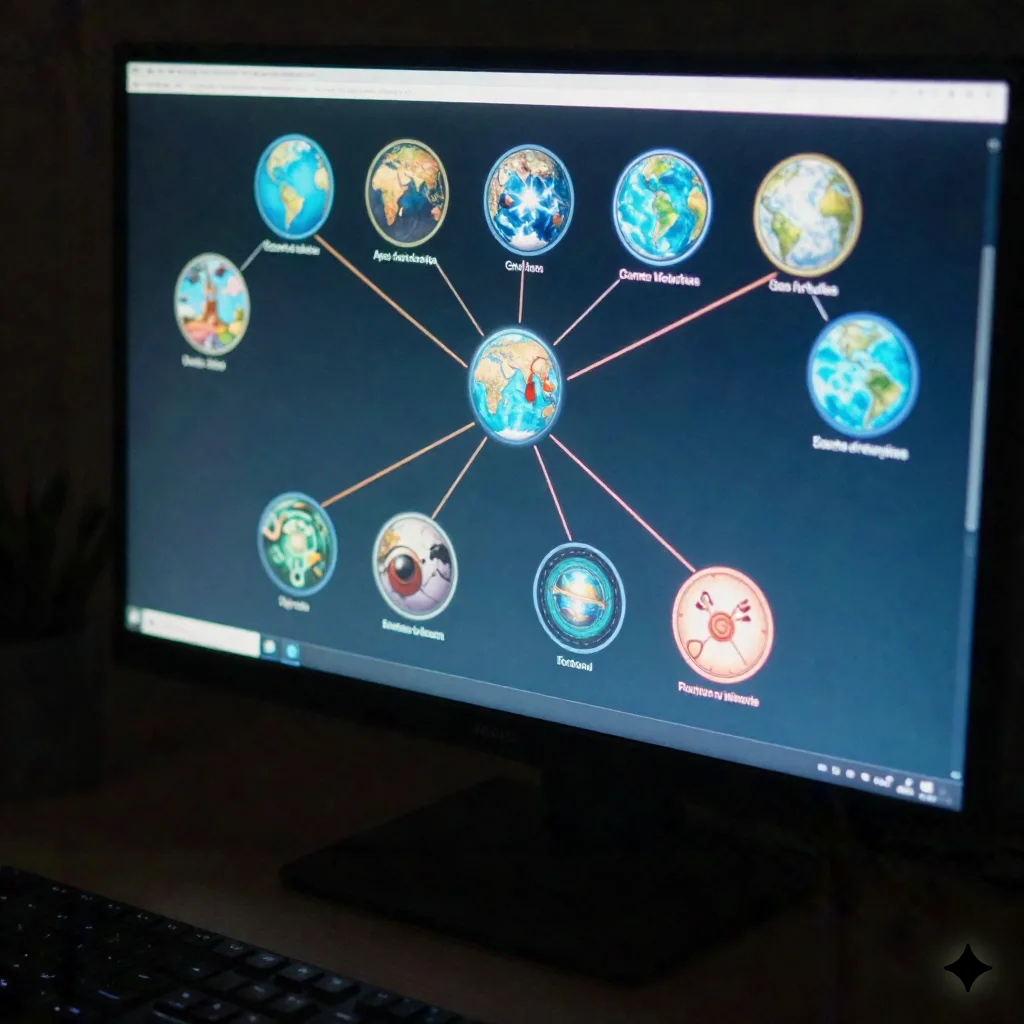
You take an existing world someone else generated, fork it by changing one variable, and document what shifts. The original creator gets a mention. You get a differentiated take on an established prompt. Both channels benefit.
Forks that perform well:
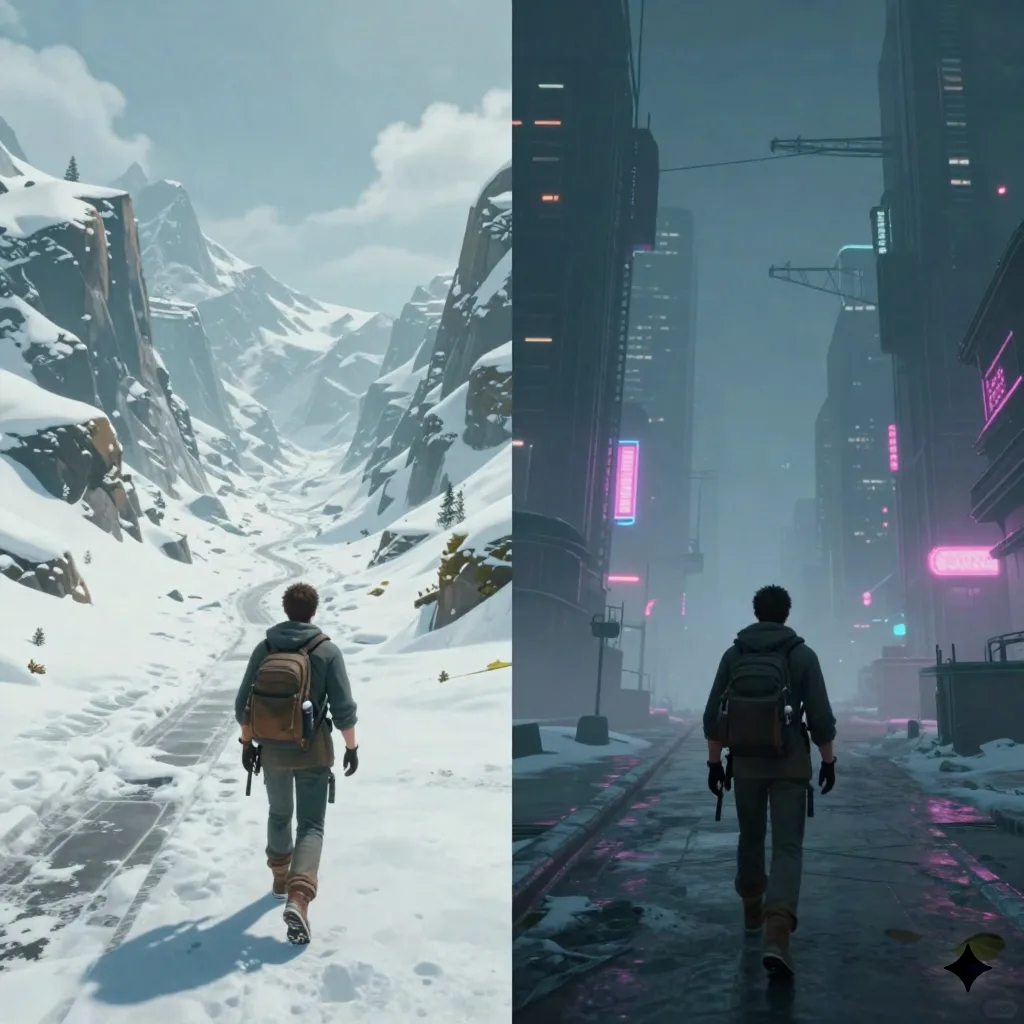
Same location, different decade (1920s Paris becomes 2060s Paris with the same street layout)
Same world, opposite weather (arid desert plateau becomes the same plateau after 1000 years of flooding)
Same architecture, different civilization (the ruins read differently when they belonged to a spacefaring culture vs. a feudal one)
The format scales. One world can generate eight forks. Eight forks is two months of content if you post weekly.
AI documentary reconstruction: history with no budget cap
Documentary-style content is where AI video ideas stop being a game design thing and start being a general creator strategy.
The format: pick a specific historical event or location that is impossible to film (the Library of Alexandria on its last day, a medieval market in Bruges in 1350, the original Silk Road trading post at Dunhuang). Generate the visuals. Write the narration. Edit.
The reason this works is that the SERP for this type of content is thin. YouTube is full of talking-head history channels. Cinematic reconstructions at this quality level were not possible for solo creators before generative AI.
The constraint that makes it work: specificity. "Ancient Rome" is not a video idea. "The street market outside the Pantheon on a Tuesday in 120 AD" is.
Multiplayer world sessions: the format with the highest ceiling
This one requires two creators and a world generation tool with live multiplayer.
Both creators enter the same generated world simultaneously. Neither has explored it before. The video captures both perspectives, split-screen or intercut. The friction is the content: disagreements about which direction to go, one player discovering something the other missed, one building on what the other described.
The format is high-effort and high-ceiling. It produces the kind of authentic reaction content that audiences can tell was not scripted. The surprise is structural, not performed.
For game designers specifically, it is also useful research. How do two people navigate a world they did not make? What are they drawn to? What breaks down? The answers inform the next generation.
The world critique: an underused format
Most AI video creators document what the engine does. Few critique it.
The world critique format applies film criticism to AI generation. You generate something, then break down what the engine's choices reveal about its training data, its aesthetic defaults, its failure modes.
Why does a "cyberpunk Tokyo" prompt always produce the same three architectural features? Why does "ancient Egypt" in AI generation always look like a film set rather than a lived environment? Why does weather generation still default to "dramatic" when reality is mostly overcast and unremarkable?
This format performs well with design-literate audiences. It is the difference between showing a world and having something to say about it. The criticism IS the content.
Skip this if you are not genuinely interested in the underlying systems. Performed criticism reads as hollow within the first minute.
Prompt engineering as content: show the work
The single most underleveraged AI video idea is transparency about the prompt itself.
Not "here is the AI result." The full sequence: the first prompt, the first result, what was wrong with it, the revision, the next result, the adjustment, the final version. Narrated.
This format performs because the audience is not just watching a generated world. They are watching a decision-making process. They can learn something. They can steal the approach. They can argue with your choices.
a foggy 1920s Detroit jazz club where the bartender is a robot
Generation one: looks like a VR demo from 2019. Too clean. Too literal on the robot. Revision: add "worn velvet seats, cigarette smoke, one flickering light above the bar." Generation two: better. The robot now reads as out of place in a good way. Revision: remove the explicit jazz instruments from the prompt and let the environment carry the era. Generation three: done.
That is a video. That is also a tutorial. That is also a replicable process your audience can apply to their own prompts.
What to skip: AI video formats that are already crowded
A few categories are saturated beyond the point where new entrants can realistically compete:
Generic "AI tools roundup" videos. Every channel with 50,000 subscribers and an AI angle already has twelve of these. The information half-life is three months. Skip unless you have a specific angle that the existing roundups miss.
Talking avatar videos with AI voiceover. The format peaked in 2025. Audiences have developed a strong sense of when a video has no human behind it. That sense is now working against the format.
"AI did X faster than a human" challenge videos. These work once. The novelty does not survive the second viewing.
The common thread: formats that treat AI as the subject of the video rather than a tool inside the production. The subject that earns long-term audiences is always the creator's perspective on something. AI is the camera, not the story.
How multiplayer worlds change the content equation
Single-player AI world exploration is a soloist format. Multiplayer world exploration is a band format.
The distinction matters because bands create chemistry that soloists cannot manufacture alone. Audiences follow bands for the dynamic between players, not just the game being played. The world is the stage. The creators are the performers.
This is why the most successful long-term AI video channels in 2026 are not solo creators building libraries of generated content. They are pairs and small groups who have an established dynamic and are using AI-generated worlds as the consistent variable in an otherwise human-led format.
The prompt is a place. Who you bring into it is the show.
Choosing your AI video format: a quick decision tree
If you are new to AI video creation and trying to pick a starting format, here is a practical framework.
Do you have a strong point of view on a specific subject? Start with the world critique or the documentary reconstruction. Both require you to bring an opinion, and both reward a creator who actually knows something about the topic beyond what the generation tool produces.
Do you have another creator you collaborate with regularly? Start with multiplayer world sessions or fork-and-react. The chemistry between two people navigating an unfamiliar space is hard to fake and easy to produce.
Are you a solo creator who is still building an audience? Start with prompt engineering transparency videos. The format is genuinely educational. It earns subscribers who are there for the process, not just the output. Those subscribers are more loyal and more likely to share.
Do you want a format that scales to a long-running series? World walkthroughs with a consistent prompt structure. Pick a genre (haunted architecture, submerged cities, post-collapse ecosystems) and stick with it. Consistency of theme gives the channel an identity even as the individual worlds vary.
The fastest failure in AI video is starting with the format that is most technically impressive rather than the format that suits how you actually create. The world generation engine is only as interesting as the person navigating it.