Sora Alternatives for Indie World-Builders in 2026
Summary
TL;DR: if you are searching for Sora alternatives because OpenAI shut the app down in April 2026 and the API follows in September, Kling AI is the closest match for an indie game dev pipeline: strong camera control, a usable free tier, and paid plans under ten dollars a month. Runway bundles several models under one subscription. Luma Dream Machine suits full campaigns, not single clips. Pika is the cheapest option for fast, playful teasers rather than cinematic mood trailers.
Sora alternatives are not a hypothetical search for indie world-builders anymore. OpenAI shut down the Sora app in April 2026 and the API follows in September, so anyone using it for pitch trailers or mood clips needs a replacement now. After checking pricing, free tiers, and camera control on four real contenders, Kling AI is the pick for a game dev pipeline: strong motion, a usable free tier, and plans starting under ten dollars.
Why this isn't a world-engine review
Every review on this journal usually means Decart Oasis, Inworld, Roblox AI Studio, or the fork-friendly playable spaces we build here at AuxWorld. Kling AI, Runway, Luma Dream Machine, and Pika are not that. Feed them a prompt and you get a video you watch, ten seconds, maybe less. Feed AuxWorld a prompt and you get a world you can walk into, forked, remixed, still running after you close the tab.
So why cover video generators at all. Because half the indie devs reading this also need a thirty-second mood trailer for a Kickstarter page, a devlog cutaway, or a Steam capsule clip, and building that inside a game engine is slower than it should be. This piece is about that adjacent job: pre-production video, not the world itself. Keep the two straight and the tools below make a lot more sense.
What actually happened to Sora
OpenAI's own help center confirms the Sora web and app experiences were discontinued on April 26, 2026. The API has a hard stop scheduled for September 24, 2026. If you built any part of a pipeline around it, prompts, cameo shots, export scripts, that clock is real. Existing users can still pull their content at sora.chatgpt.com/sunset, but the window closes for good on that date.
Sora's pitch was realistic motion, synced dialogue, and a cameo feature that dropped a real person into a generated scene. None of the four tools below copy that exact set of features. What they do cover is the actual job most indie teams hired Sora for: turning a prompt or a still frame into a usable clip.
What indie devs actually use these tools for
Nobody on this journal is shipping playable content out of a text-to-video model. That's not what they're for. What they're good for, in a real solo-dev pipeline, looks like this:
A mood trailer for a Kickstarter or itch.io page, built from concept art before a single level is playable.
A devlog cutaway showing a world's atmosphere in motion, separate from actual gameplay capture.
A pitch deck clip for a publisher meeting, where "here's the vibe" matters more than a frame-perfect demo.
Marketing shorts for a launch window, cut faster than waiting on a render farm.
I tested this exact use case for Mist Engine's next devlog: a thirty-second mood piece for a foggy mountain village before the playable build existed. The prompt I ran across all four tools:
a slow dolly-in on a foggy mountain village at dawn, lanterns still lit,
one figure crossing a wooden bridge, muted color, handheld camera feel
How I compared them
I started from OpenAI's discontinuation notice, then pulled current pricing and specs straight from each vendor's site in the first days of July 2026: Kling AI's membership page, Runway's pricing page, Luma's plans page, and Pika's subscription page. Every homepage screenshot here is a real, unedited capture at 1440x900, not a marketing render pulled from a press kit. Motion and camera-control claims are checked against each vendor's own launch material for Kling 3.0, Gen-4.5, Ray3.2, and Pika 2.5, not just their tagline.
Worth saying upfront: I did not have hands-on generation credits across all four for this specific prompt at time of writing, so the notes below lean on published specs, my own read of each tool's demo reels, and the catalog data already gathered for this comparison. Where I say a tool "feels" a certain way, that's a judgment call, not a lab result. Treat the criteria table as the harder facts, and the verdicts as one worldbuilder's read.
Kling AI: the closest thing to a mood trailer generator
Kling AI, built by Kuaishou, is the pick if you want camera moves that read as deliberate rather than random: pan, zoom, dolly, the kind of shot list you'd actually storyboard for a game trailer. The free tier isn't cleared for commercial use, which matters if that mood clip is going on a paid Kickstarter page, but it's generous enough to test prompts like the one above before committing a card number. Paid plans start around ten dollars a month once intro pricing rolls off.
Version 3.0 is the release people mean when they say Kling now sits next to Veo and the departed Sora 2 on cinematic output. Image-to-video is the standout feature for a worldbuilder specifically: feed it a piece of environment concept art and the motion it adds to that still frame looks considered, not like a random zoom effect.
Runway: one subscription, every model, real editing tools
Runway stopped being a single model a while ago. It's a workbench: its own Gen-4.5 alongside Kling 3.0, Veo 3.1, Seedance 2.0, and for now, Sora 2 Pro, all under one login. Aleph 2.0 lets you re-edit an existing shot instead of regenerating from scratch, which matters when a devlog clip needs one small fix and not a full re-render.
The tradeoff is credits and learning curve. Standard plans start at twelve dollars a month with six hundred twenty-five monthly credits, and those burn fast once you're rendering at 4K resolution or running the Runway Agent repeatedly on a multi-shot sequence. If your pipeline already has you jumping between three separate video tools, Runway collapses that into one bill, at the cost of a genuinely dense interface.
Luma Dream Machine: built for campaigns, not single clips
Luma pivoted from a bare text-to-video sandbox into Luma Agents, a system that plans, generates, and iterates across a whole set of assets, video, stills, storyboard frames, while keeping shared context between steps. For a studio launching a full Kickstarter campaign, that coordination is genuinely useful: one brief in, a matched set of promotional assets out.
For a solo dev who just wants one thirty-second mood clip, it's the wrong tool. There's no free tier at all, plans start at thirty dollars a month, and the agent-first workflow adds planning overhead you don't need for a single shot. Save Luma for the week you're building a full campaign, not the afternoon you need one trailer.
Pika: fast, cheap, wrong tool for cinematic mood
Pika's real signature isn't straight text-to-video, it's the Pikaffects and Pikatwists toolkit: quick, stylized transformations, squish, melt, costume swaps, packaged more cleanly than any other tool here. That's a great fit for a playful social teaser about your game, not for the foggy dawn mood shot a Kickstarter page usually wants.
Standard plans start at eight dollars a month, the cheapest paid entry point of the four, and the free tier gets you testing at 480p with a watermark before you pay anything. If the ask is "fast, cheap, a little weird" for a devlog teaser clip, Pika is the right call. If the ask is cinematic realism for a pitch deck, look at Kling first.
Which one goes in your pipeline
None of these four are a drop-in Sora replacement, cameo feature included. They're the tools that cover the actual generation job, at prices and free tiers Sora never offered once it moved past its invite-only phase. Kling AI is the closest match for a worldbuilder's mood trailer: real camera control, a free tier worth testing on, and a price that doesn't compete with your engine budget. Runway is the pick if your pipeline already spans several models and you want one login. Luma fits a studio running a full campaign, not a solo dev with one clip to make. Pika is the fast, cheap option when the ask is a fun teaser, not a cinematic one.
Pick the one that matches the shot list you actually have, not the one with the loudest launch post. Then get back to the world that's still running in the other tab.
At-a-glance
| Kling AI | Runway | Luma Dream Machine | Pika | |
|---|---|---|---|---|
| Starting paid price | ~$10/mo (Standard, after intro pricing) | $12/mo (Standard, annual billing) | $30/mo (Plus) | $8/mo (Standard) |
| Free tier | Yes, but not cleared for commercial use | 125 one-time credits, no recurring free plan | None, paid only from $30/mo | Yes, 80 credits/mo, 480p, watermarked |
| Camera control | Native pan/zoom/dolly, strongest motion physics of the four | Aleph 2.0 frame edits plus a conversational Runway Agent | Handled inside agent-planned sequences, less manual control | Effects-first (Pikaffects/Pikatwists) over granular camera moves |
| Max resolution | 1080p/4K on paid tiers | 4K upscaling included from Standard | EXR export for production pipelines | 1080p on Standard and above |
| Single clip length | Up to 10s per generation (Kling 3.0) | Credit-based, not a fixed per-clip cap | Multi-shot sequences via Luma Agents | 5-10s per clip (Pika 2.5) |
| Best use in an indie dev pipeline | Cinematic mood trailers, motion from environment concept art | Multi-model workbench for a full campaign: trailer, cutaway, ad cuts | Coordinated campaign assets (video + stills + deck), not single clips | Fast social teasers and devlog clips, not a cinematic mood trailer |
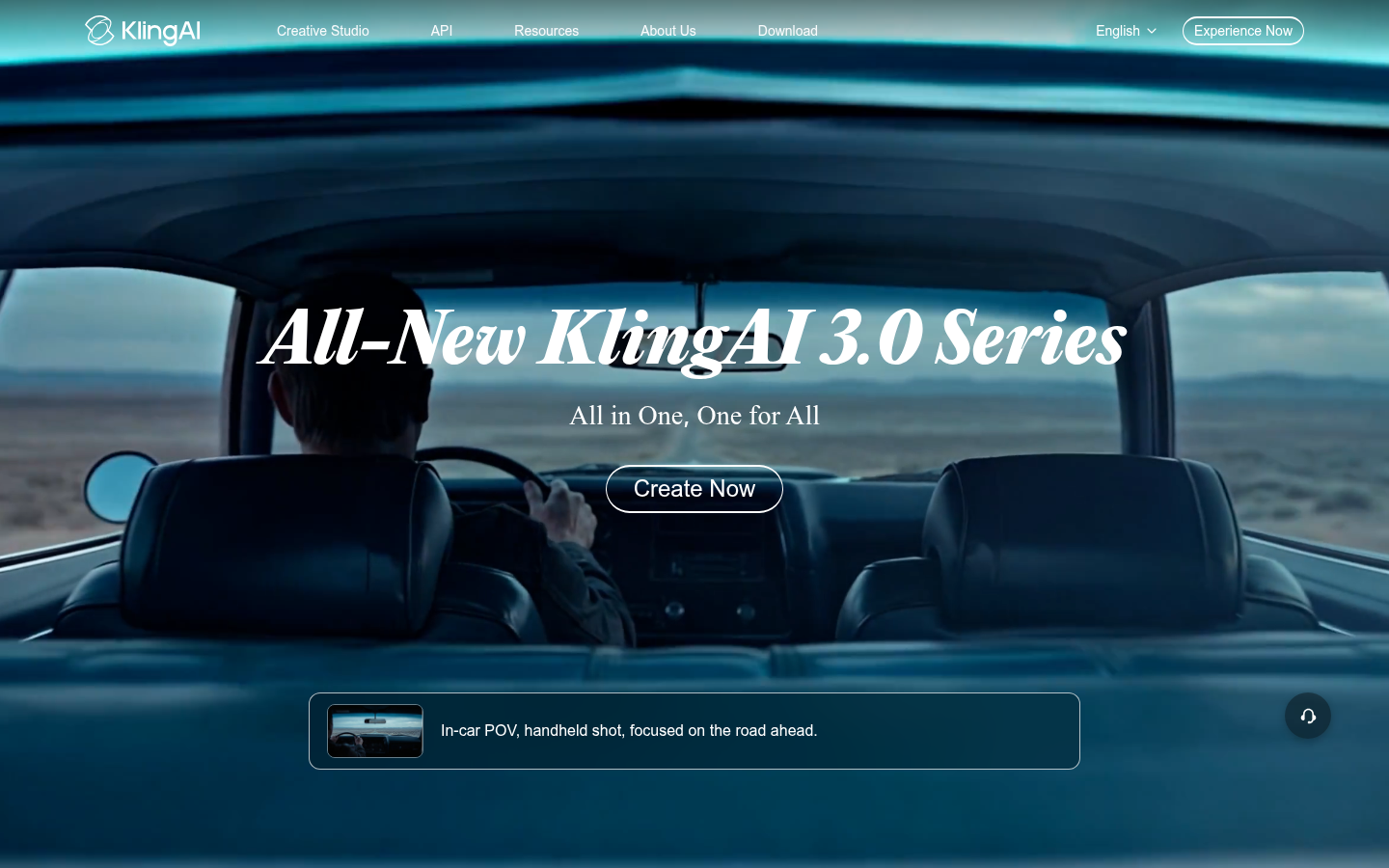
Kling AI
- Camera moves read as deliberate, closest thing to a storyboarded shot list
- Free tier generous enough to test prompts before paying anything
- Image-to-video turns a still environment concept into convincing motion
- Kling 3.0 is actively compared to Veo and the departed Sora 2 on cinematic output
- Free tier output cannot go on a paid Kickstarter or Steam page, commercial use needs a paid plan
- Queue slows down during peak hours on the lower tiers
The closest match for a worldbuilder's mood trailer, at a price that doesn't eat your engine budget.
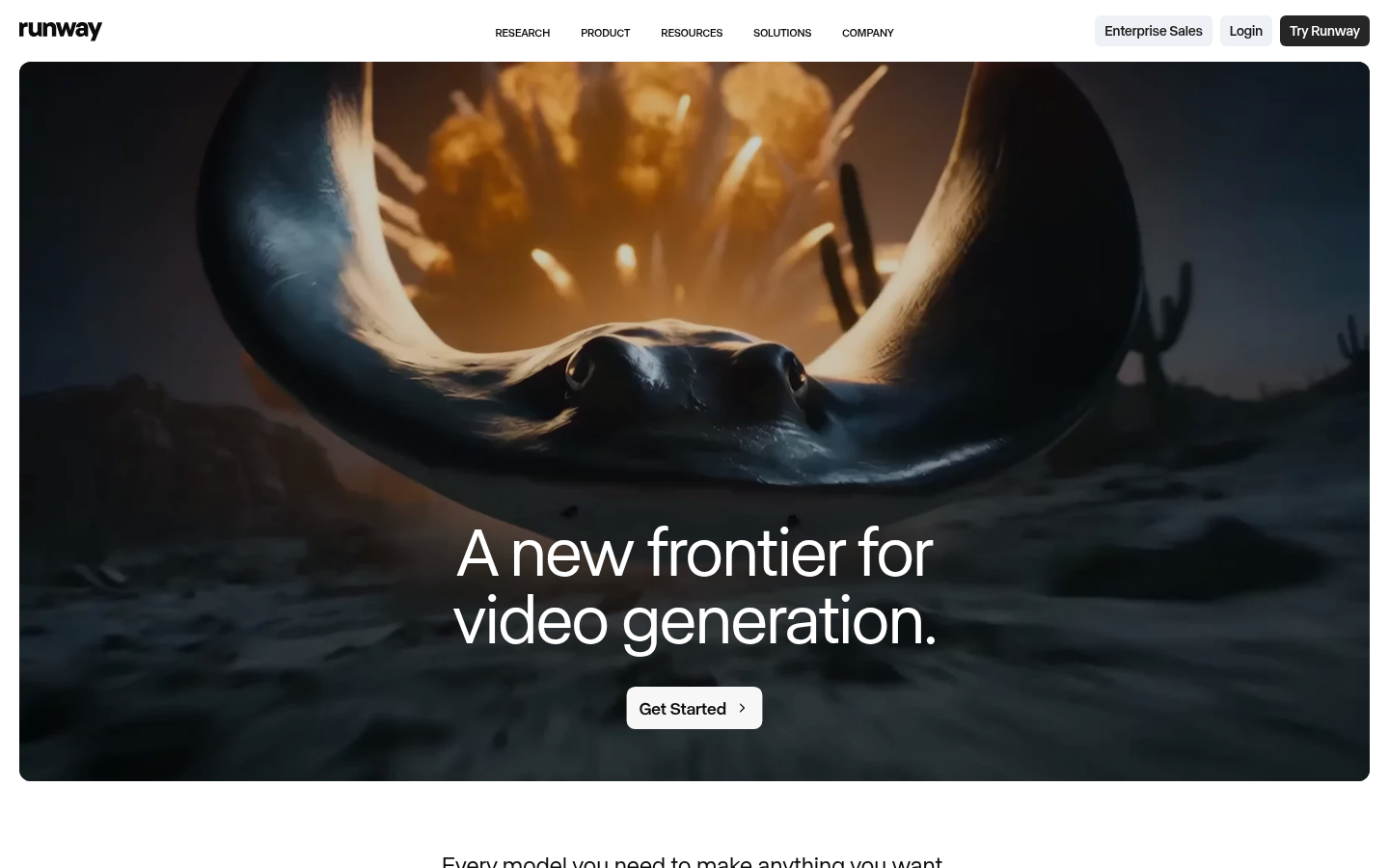
Runway
- Bundles its own Gen-4.5 with Kling 3.0, Veo 3.1, Seedance 2.0, and for now Sora 2 Pro
- Aleph 2.0 re-edits an existing shot instead of forcing a full regeneration
- Runway Agent turns a plain instruction into a finished multi-shot sequence
- Deep production tooling: 4K upscaling, asset storage, real editing controls
- Credits burn fast once you render in 4K or run the Agent repeatedly
- The sheer number of tools and modes takes real time to learn well
Best if your pipeline already spans several models and you want one login.
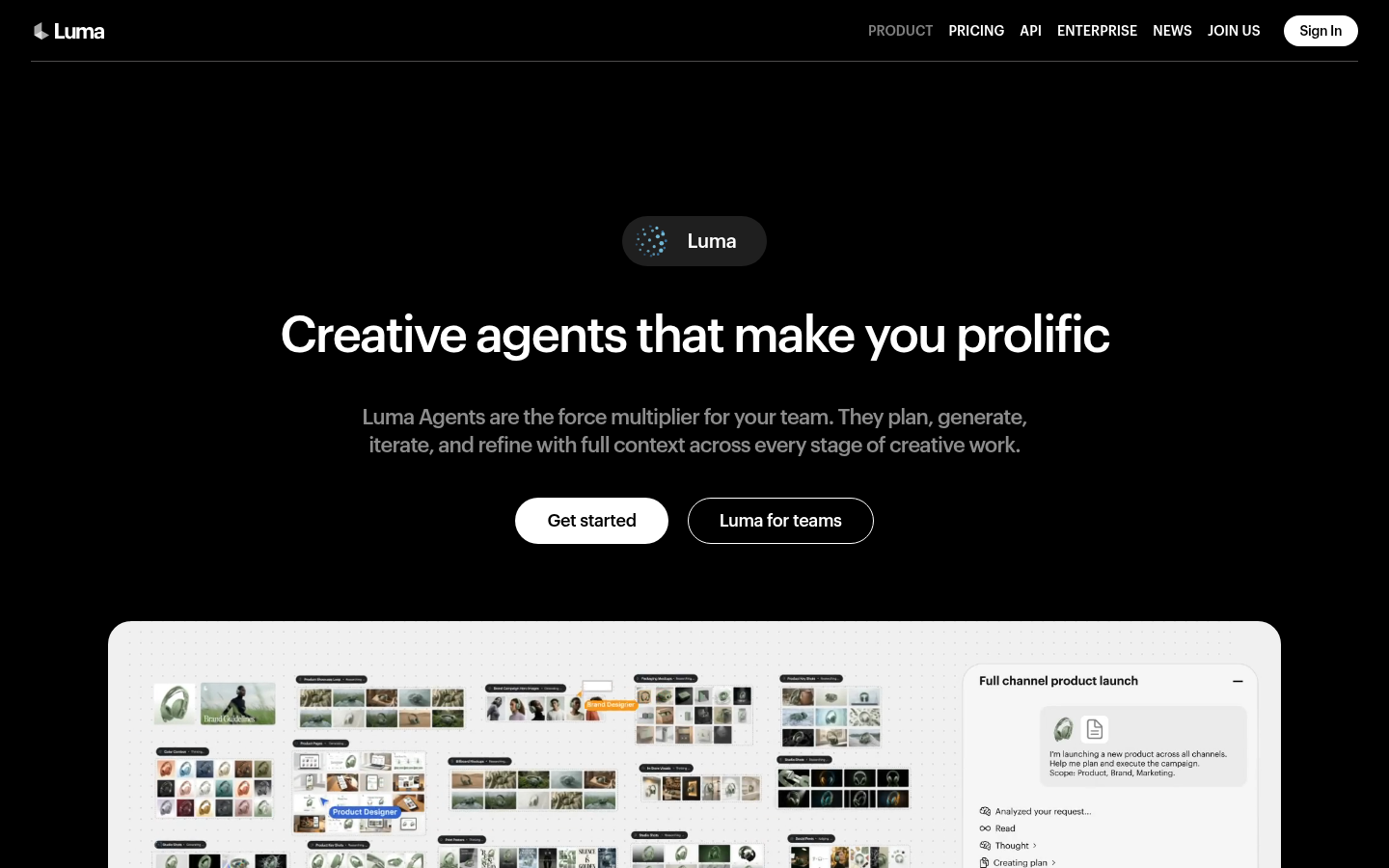
Luma Dream Machine
- Luma Agents keep shared context across video, stills, and storyboard frames
- Genuinely useful for a studio launching a full Kickstarter campaign at once
- Ray3.2 and Ray3.14 models hold up on product-style visual consistency
- EXR export fits into an existing production pipeline more cleanly than a plain video file
- No free tier at all, so you cannot test it without paying $30/month minimum
- The agent-first workflow is slower and heavier than you need for one quick mood clip
Fits a full campaign, not the afternoon you just need one trailer.
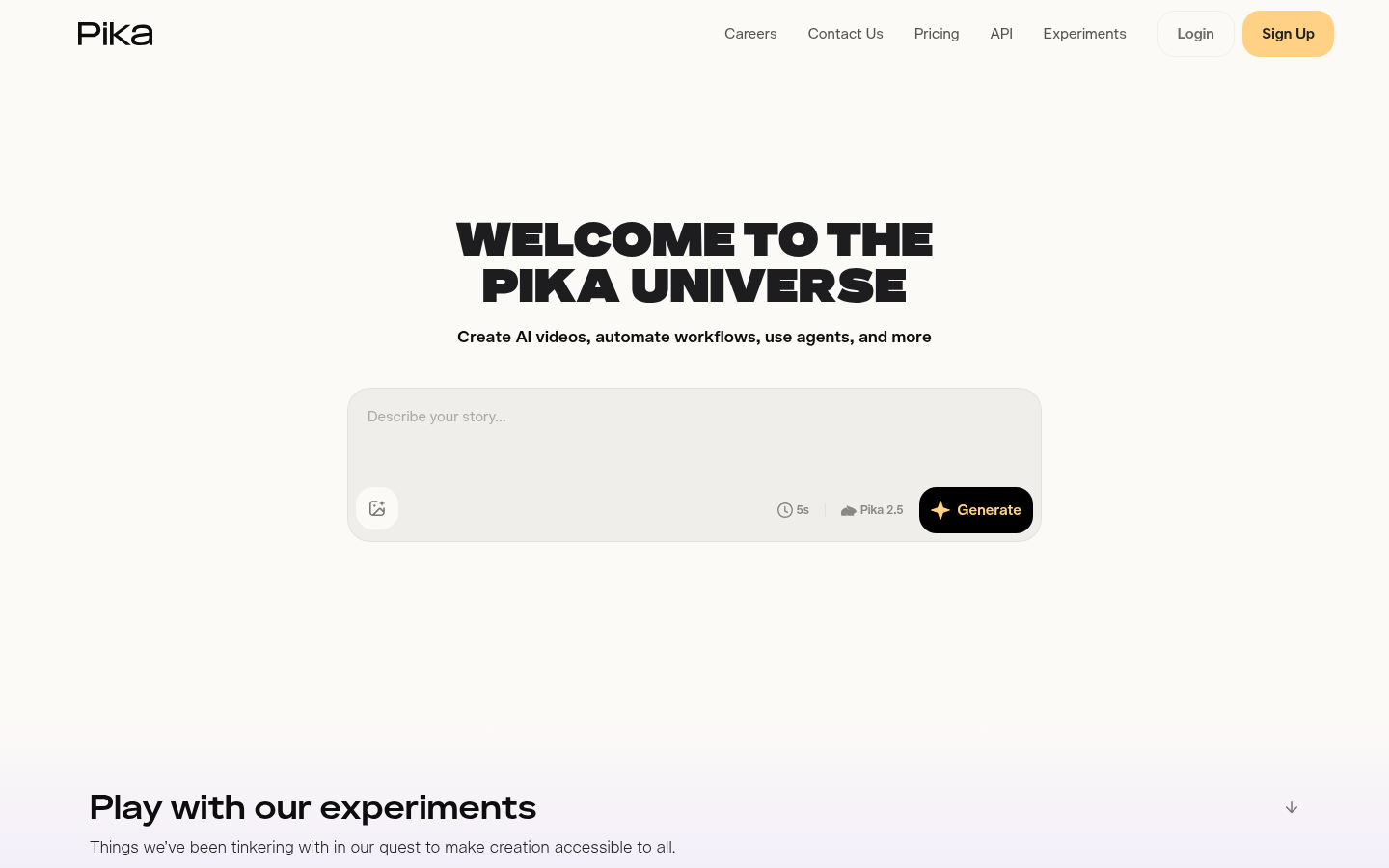
Pika
- Cheapest paid entry point of the four at $8/month
- Pikaffects and Pikatwists package playful transformations no other tool here does as cleanly
- Pika Agent and Pika MCP make chat-driven generation genuinely fast to iterate on
- Free tier lets you test the core model before spending anything
- Free tier caps out at 480p with a visible watermark
- Less convincing than Kling on the straight cinematic realism a Kickstarter trailer usually wants
Right for a playful devlog teaser, wrong tool for a cinematic mood trailer.
Verdict
Kling AI is the pick for a worldbuilder's mood trailer: real camera control, a free tier worth testing on, and a price that doesn't compete with your engine budget. Runway wins if your pipeline already spans several models and you want one subscription. Luma Dream Machine fits a studio running a full campaign, not a solo dev with one clip to make. Pika is the fast, cheap option when the ask is a fun teaser rather than cinematic realism.
How we tested
Built from OpenAI's own discontinuation notice for Sora, then current pricing and feature specs pulled directly from each vendor's official site in the first days of July 2026: Kling AI's membership page, Runway's pricing page, Luma's plans page, and Pika's subscription page. Every homepage screenshot here is a real, unedited capture at 1440x900 resolution, not a marketing render. This comparison leans on published specs and catalog research rather than hands-on generation credits across all four tools for the specific prompt discussed in the body, a distinction we call out explicitly so readers can weigh the criteria table (harder facts) against the verdicts (one worldbuilder's read).